Landau’s contemporary call him an oddity virtuoso of an extraordinary breed, since he was a man possessed with incredible intellectual integrity. He had a rebellious nature and had profound responsibilities and commitments all through his life – a life that could be described as an awful show of epic proportions.
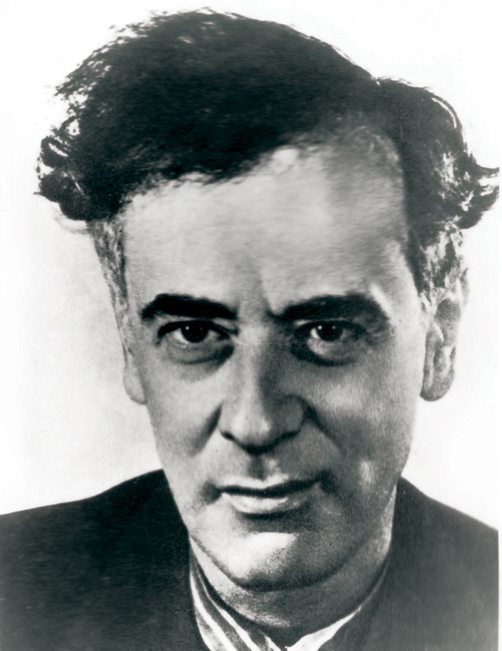
He was born in the year 1908 to a Jewish couple in Baku. His father was an engineer working at the local oil industry and his mother was a doctor. He was recognized as a child prodigy with interest in mathematics and chemistry. He himself said a few times that he barely remembers a period in his life when he was not acquainted with math.
Landau delivered 100 papers and for his 50th birthday he was introduced with the ‘Ten Commandments,” to showcase his 10 most excellent papers:
a) Density Matrix (1927)
b) Landau Diamagnetism (1930)
c) Dynamics of Ferromagnets (1935; with E M Lifshitz)
d) Theory of Phase Transitions (1937)
e) Intermediate State of Superconductors (1937)
f) Statistical Theory of Nuclei (1937)
g) Theory of Superfluidity (1941)
h) Renormalization of Electron Charge in QED (1954, with Abrikosov and Khalatnikov)
i) Theory of Fermi Liquid (1956)
j) Two-component neutrino (1957)
In 1938, he was arrested and put behind bars for a year on the suspicion of being a German spy. There was no proof for any of the allegations made and it is likely Landau has been just another victim of the Stalinist regime of terror. He was freed after various remarkable researchers sent letters to Stalin requesting his freedom. Soon after his release, Landau got married and had a child, Igor, who later in his life became an experimental physicist.
In 1962, Landau had a car accident that left him in comma for almost six weeks. This car accident ended the career of the commended researcher. Specialists from around the world tried to revive him, which resulted in slow improvement in his condition. He could no longer perform any further research, and he died six years later, succumbing to his injuries.
Related Articles: