

Gathering space junk has become important as we gain a greener view on life. Something similar is happening on Mount Everest, where decades of abandoned oxygen bottles have accumulated. Recovering abandoned space vehicles could prove risky if their batteries suddenly exploded. Phys Org advises engineers in bunkers have been investigating what might happen next.
More than Just a Game for Engineers in Bunkers

The engineers descended into bunkers underground to destroy perfectly good batteries in realistic ways. They shot at space batteries with bullets to simulate micro-meteoroid strikes. They also did more mundane things like overcharging, overheating and causing short circuits.
Most of these abuses occurred in inert atmospheres lacking oxygen. However this did not necessarily tame the batteries because they contained fuel and oxidizer for combustion. Therefore the engineers in bunkers recommend that batteries be discharged as much as possible at the end of every mission. They should also be separated from their solar panels and remain within safe temperature ranges.
That Sounds Somewhat Difficult to Back Fit Up There
It is indeed, although once we know what might happen to a lithium-ion battery in space we are a step ahead. Although of course we are talking old technology. However, this work by engineers in bunkers can contribute to a safer new.

The ‘battery abuse’ took place in test bunkers at France’s Alternative Energies and Atomic Energy Commission. The overall goal was to reduce satellites exploding into unrecoverable debris. Humankind has been contributing to space debris since 1979. This has become a major problem and an irresponsible mess.
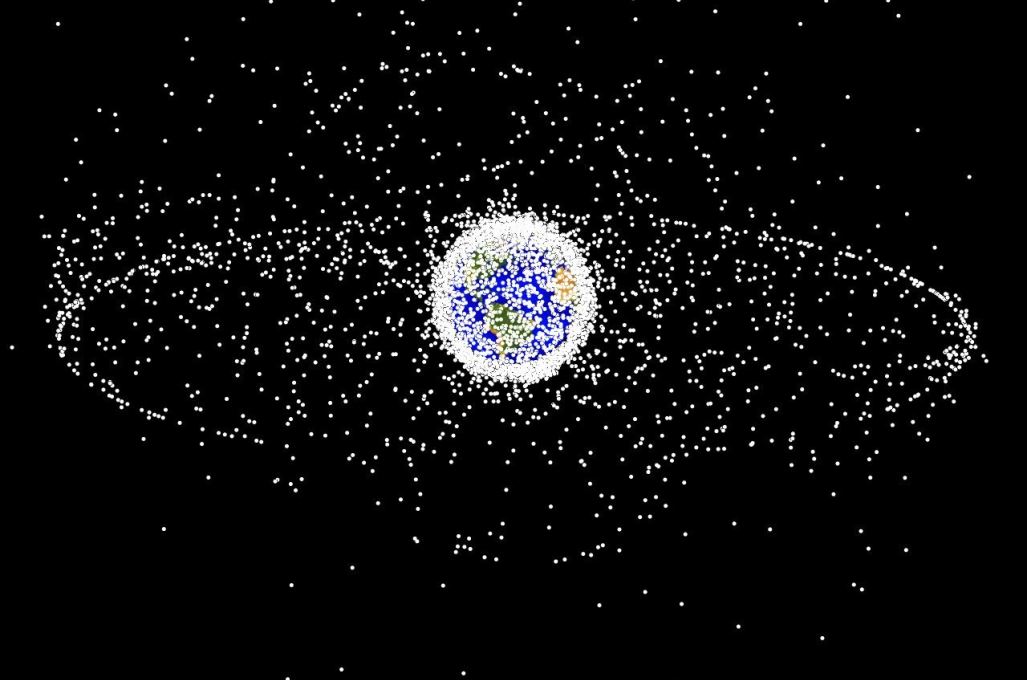
The US Strategic Command traced a total 17,852 artificial objects in orbit above the Earth in 2016. A mere 1,419 were operational satellites. But that’s only the beginning. As of January 2019, there were around 34,000 pieces of space junk larger than 10 cm in orbit around the Earth.
Related
Space Station Replacement Batteries: Update
Lithium Battery Fires in Space – NASA’s Plan
Preview Image: Space Debris Around Earth (Computer Simulation)


