


Scientists from MIT’s Lincoln Laboratory and Department of Materials Science & Engineering were chatting about smartphone battery life. The topic was about losing energy as signals travel around smartphones. They realized that’s the big disadvantage of a single battery. Could nano batteries be more electrically efficient they wondered?
Interesting, But Could Nano Batteries Be That Small?
Today’s smartphones have a very large number of nanoscale switches we call transistors. When they exchange a signal they draw energy from the battery, but the journey absorbs some of this. Consequently batteries discharge faster than they theoretically should.

Assuming we could make them small enough, the scientists reasoned, could nano batteries do the job on a decentralized basis? The only problem is nano batteries are still too large. Therefore let’s do something about this, they agreed. Imagine pairs of tiny transistors and batteries working together that way!
MIT News Reports They Are Making Significant Progress
This scaling ability would allow the batteries to be easily integrated near transistors at a nano– and micro-level. Or be near components and sensors at the millimeter- and centimeter-level. “Batteries are one of the biggest problems we’re running into at the laboratory,” says the project’s principal investigator.
“If we could create batteries to any shape or geometry cheaply, this opens doors to a whole lot of applications.” We are happy to report the team has made good progress in developing nanoscale hydrogen batteries using water-splitting technology. Because these are now just 50 nanometers thick and that’s thinner than a human hair. “Moreover, this scaling ability allows the batteries to integrate easily near transistors at a nano- and micro-level,” the researchers explain.
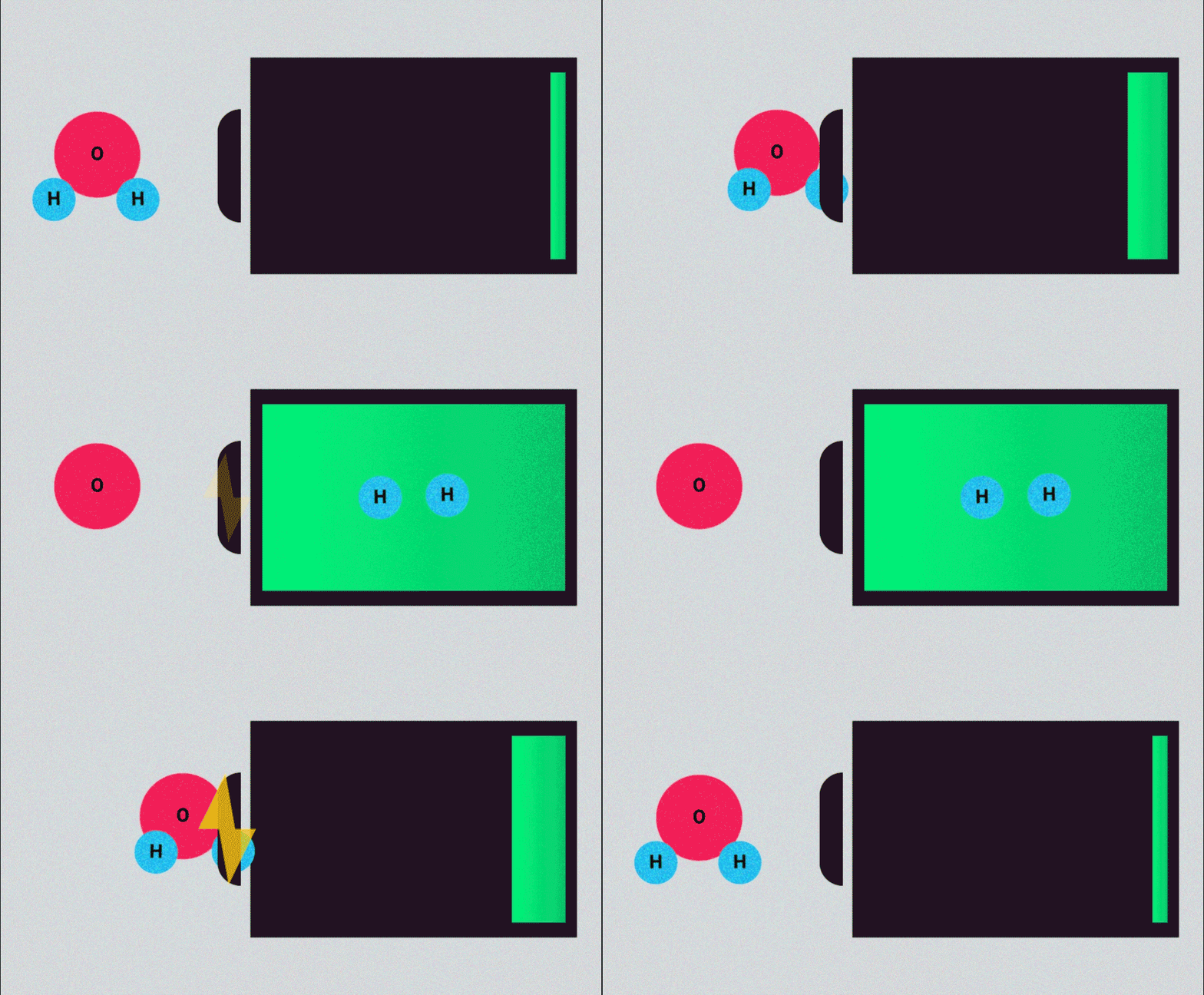
“They could also be near components and sensors at the millimeter- and centimeter-level.” We no longer wonder whether nano batteries could turbo charge smartphones. Instead, we want to know what could nano batteries do next.
Related
Nano Engineering Capacitors as Batteries
3D-Printed Lithium-Ion Batteries on Cards
Preview Image: Nano Scale Batteries May Power the Future


