Most of us shy away at the thought of vegetables. Not everyone is fond of eating these healthy, organic treats given by nature to sustain our bodies with much-needed nutrients. However, vegetables are more than food for our physical wellness. They also provide energy for our daily devices and may even play a big role in the next generation of electric storage!
More Than A Vegetable: It’s A Battery!
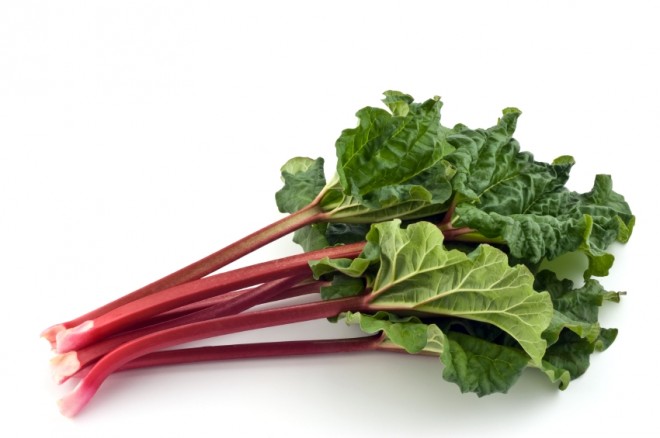
Harvard’s School of Engineering and Applied Sciences research team has discovered a new breakthrough in making batteries by using rhubarb. Rhubarb is a perennial plant with large leaves and deep red stalks, classified under the Polygonaceae family. It contains glycosides with laxative and cathartic properties, as well as quinones, a molecule used to store energy in green plants. Quinones has been used by researchers to create a metal-free high-performance type of battery called flow battery, which is one of the best contenders in storing renewable energy.
A Look Into Flow Batteries
A flow battery is different from the traditional battery which makes use of solid electrodes. A flow battery stores the energy in tanks of fluid outside its container, much like a fuel cell. The fluids are transmitted into the cell through the electrodes, and are converted into electricity. Flow battery size and capacity can be modified both from the electrode side and the tank side.
How The Discovery Came About
Harvard’s research team was inspired at the way plants store energy from the sun. During photosynthesis, quinones, a substance found in chlorophyll, switch back and forth between reduction and oxidization without showing any sign of degradation. The same strategic method can be used in producing flow batteries.
Making quinones water-soluble, the research team engineered a flow battery that will exploit the rhubarb’s capability of containing energy and made it work excellently. Because the quinones do not vitiate even by prolonged use, batteries with this component can have a much longer life span and better efficiency.
The rhubarb flow battery experiment is now dubbed as the “Harvard battery”. Currently, it has undergone 100 cycles without showing significant signs of disintegration.
Who knew that a vegetable can actually be a source of inspiration for a new-generation battery?
Image Source: yycgrowers
Related Posts:
How to Make a Potato Battery
How To Turn A Dough Into A Conductor And An Insulator
Biomass: Inexhaustible Source of Energy
New Research: Sugar Battery