

We sometimes find ourselves using words without being aware of what they mean. This can cause confusion, and misunderstanding too. Take the anatomy of a virus, for example. How many of us actually know what it is, and how it goes about its deadly work. We explore these tiny infectious agents in this article.
A Perfect Mechanism for Clones Inside the Anatomy of a Virus
A virus is unlike many other living things. It does not have cells that divide of their own volition. Instead, it relies on the hospitality of host cells. After a virus infects a host, it spontaneously produces many thousands of identical clones in that environment.
The anatomy of a virus conceals one of its darkest secrets. It may be a simple organism, but it can mutate, and evolve making it difficult to control. There are millions of these tiny infectious agents, yet we only have details of approximately 4,800. Therefore, when a previously unknown one like SARS-CoV-2 causing Covid-19 appears, we have no knowledge base to rely on.
What Happens to Your Body If You Get Coronavirus
A Virus Is Potentially more Powerful than Ourselves
The host cell may die once the cloned viruses have departed on their way, to continue replicating elsewhere. However, some viruses remain dormant, with occasional repeat infections like herpes. Humans coexist fairly comfortably with those causing common colds, influenza, chicken pox, and cold sores. However, others like AIDS, EBOLA and now SARS-CoV-2 are more dangerous.
The only sure-fire way to destroy a virus is to introduce a vaccine to the host body. This elicits a reaction in the host cells that eventually destroys the invader. However, we only appear to have vaccines for approximately 14 of the known 4,800 viruses.
Tinkering with the anatomy of viruses – as Wuhan researchers may or may not have done is therefore a dangerous science. A virus may be a simple organism compared to the complexity of human life. Yet it may contain the seeds of our destruction unless we keep it at arms’ length.
Related
Call for an Extraordinary Showing of Solidarity
New Vocabulary of North American English
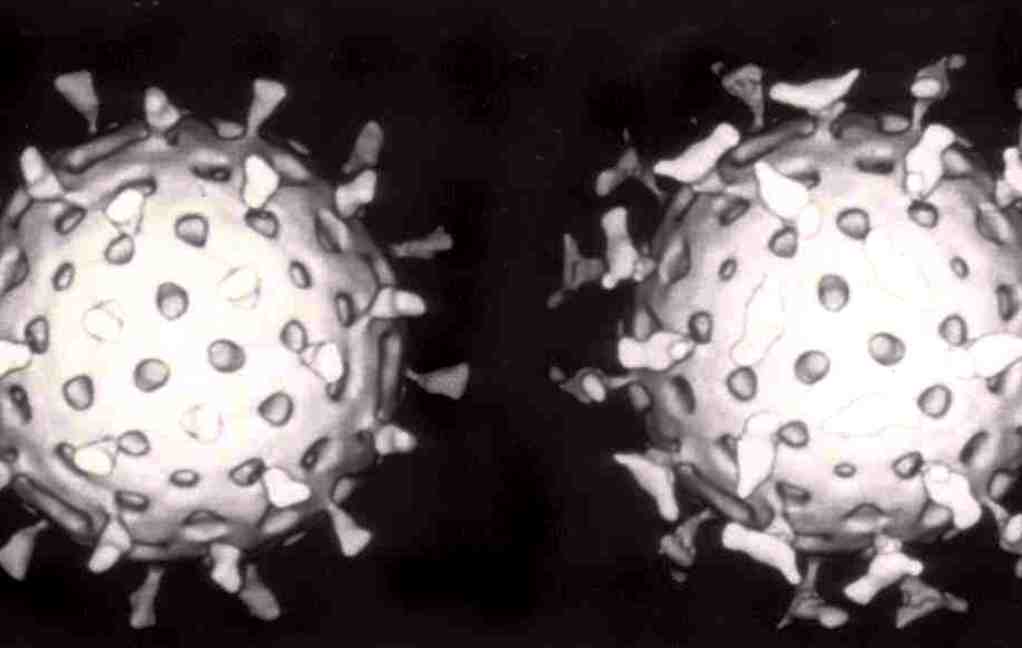
Preview Image: Two Rotavirus Particles
Video Share Link: https://youtu.be/2bI5pQGXl2o


