Centers for Disease Control, and Occupational Safety and Health Administration issued updated interim guidelines on July 8, 2020. These allow workers with potential exposure – but no symptoms or positive tests – to continue working subject to taking special precautions. The revised guideline highlights important new considerations for face coverings in meat and poultry processing facilities.
Risks of Wearing Face Coverings in Meat and Poultry Facilities
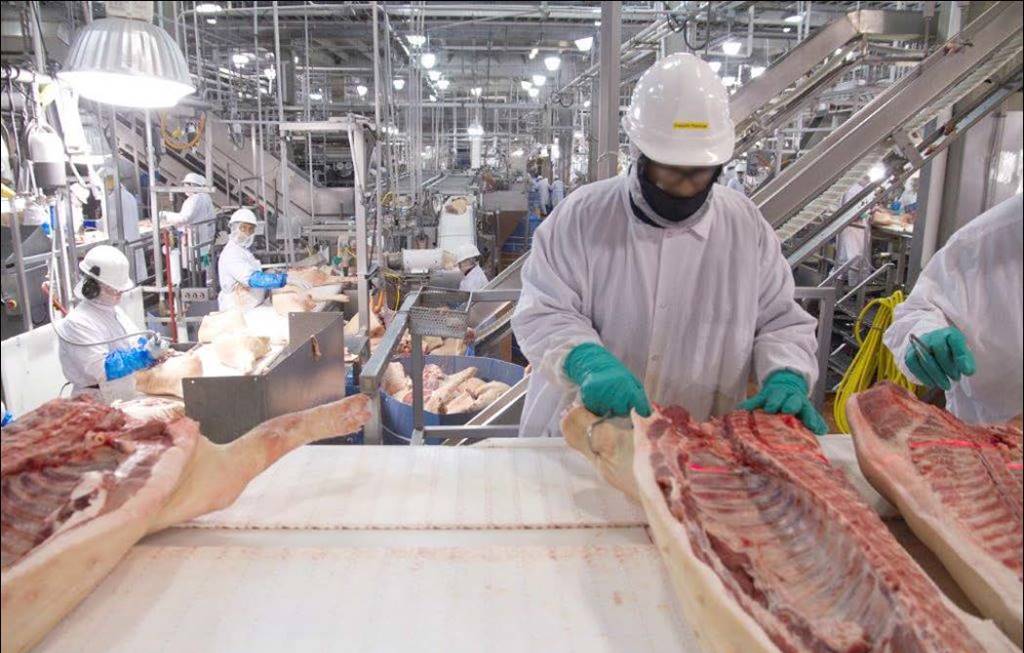
CDC and OSHA say tight processing lines, and close contact with fellow workers increase the risk of occupational virus transmission. The following critical factors are at play here:
1… Meat and poultry workers are in close proximity with each other on production lines. They also share space when clocking in and out, taking breaks, and using lockers / changing rooms.
2… Moreover, they work long, 10 to 12 hour shifts with each other. These extended contact periods increase their statistical risk of contact with potentially infectious colleagues.
3… Face coverings in meat and poultry facilities are hence a primary defense against airborne infection in these circumstances. These can also help mitigate face infection from contaminated surfaces throughout the plant.
4… Moreover, the same workers may come from particular neighborhoods, and share transport to and from work. If they share a tightly-knit community too, then the risk continues after hours.
Specific Recommendations in the Interim Guidelines
CDC and OSHA recommend floor markings, and dedicated floor-monitors to encourage single-file movement with six-foot distances. Employers at processing facilities must stagger work hours and break times, and discourage shared traveling in packed vehicles.
Face coverings in meat and poultry facilities must be changed for fresh ones in the event they become wet, soiled or visibly contaminated. Replacements must be available at strategic points. Used face coverings may be laundered at highest appropriate temperatures at the end of each shift. Then they must be machine dried, and may be packed hygienically for reuse.
Related
Covid-19 Transmission in Meat Packing Plants
Airborne Transmission in Enclosed Settings
Preview Image: Meat Processing Plant