From a previous post, we learned about the electrolyte in a battery and how important it is in creating current which powers our machines/systems/applications. Now we are ready to test our battery to ensure its optimum performance.
Testing A Battery (Something interesting…)
There are many ways to test a battery but the most common and accurate are measurement of specific gravity and battery voltage.
A hydrometer is an instrument which measures the specific gravity of a liquid against that of water. When we use a hydrometer to test a lead acid battery, we are actually measuring the amount of sulfuric acid in the electrolyte. After using the battery for a while, you might get a low reading on the hydrometer. This means we are missing the chemical which produces the electrons.
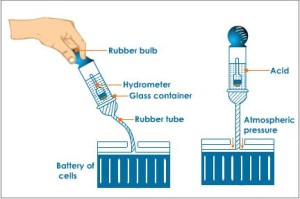 Battery Hydrometer
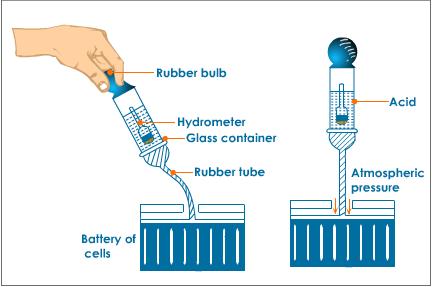
So where did the sulfur go?
It actually never left our battery, as the chemical is just resting on the battery plates and once you recharge the battery, the sulfur goes back to the electrolyte to produce electrons again!
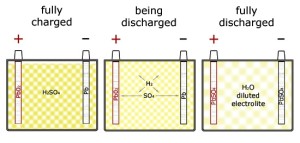 Amount of Sulfuric Acid In The Electrolyte

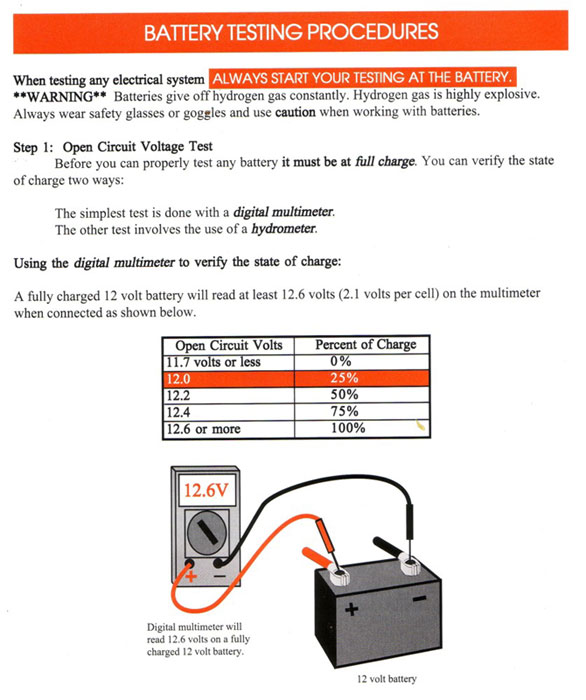
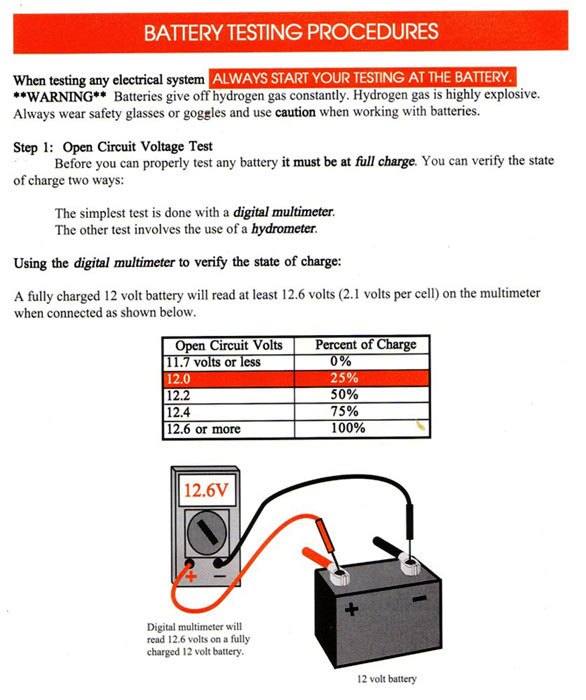
To measure the battery voltage we use a voltmeter (multimeter / see below picture).
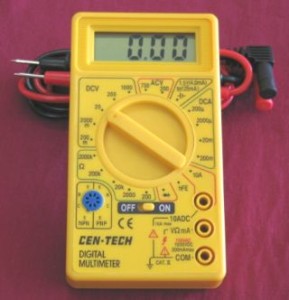 Multi Tester

To test any battery, it must be fully charged first. After charging, the surface charge must be removed and this can be done by briefly turning on the headlight, for instance, then let the battery sit for a couple of hours. After this, the battery is ready for both tests.
Another way of testing a battery is the load test and we use a load tester for this one. Amperes areremoved from the battery during a load (starting an engine is an example of load, as is anything that requires electricity to work) . Battery manufacturers usually label their product including the amp load for testing.
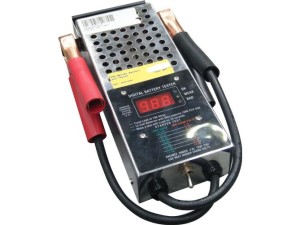
- Battery Load Tester

To evaluate the tests done,we should note the following :
Hydrometer readings should not deviate by more than 0.05 between the cells.
Voltmeter readings should also be within the following ranges :
| State of Charge | Specific Gravity | Voltage | |
|---|---|---|---|
| 12V | 6V | ||
| 100% | 1.265 | 12.7 | 6.3 |
| 75% | 1.225 | 12.4 | 6.2 |
| 50% | 1.190 | 12.2 | 6.1 |
| 25% | 1.155 | 12.0 | 6.0 |
| Discharged | 1.120 | 11.9 | 6.0 |
Of course, it goes without saying if you’re not sure about your battery condition, you should let a professional do it. Just to be on the safe side, that is.
Related articles: