EHU University of the Basque Country is in Spain, where it borders on France at the Bay of Biscay. There, scientists have been hunting for green battery materials that could make sodium-ion chemistry more competitive. They describe their success in building batteries from sunflower seeds on the MSN news channel, and we share the information here.
Why Build Batteries from Sunflower Seeds
The cobalt, nickel, and manganese in lithium-ion batteries are on the European Union’s critical materials list. This means they could not make these batteries themselves from local materials.
Nekane Nieto of EHU’s Materials and Solid-State Group, hopes to resolve this dependency by developing sodium-ion batteries using biomass-based materials. In other words, use organic substances derived from natural resources.
Nieto has focused her attention on carbons in waste materials from biomass collected by the local utility. Her idea is to produce batteries that are as sustainable as possible, she says.
But her success in building batteries from sunflower seeds only came about after her team trialed various types of biomass. These included coffee grounds, grape seeds and skins, maize cobs, plant stems, shrubbery comprising invasive species, sunflower seeds, and even biowaste compost.
Success at Last from Sunflower Seeds
Nieto’s team had some success with all these biomasses. However, the shells from sunflower seeds really stood out with the best results:
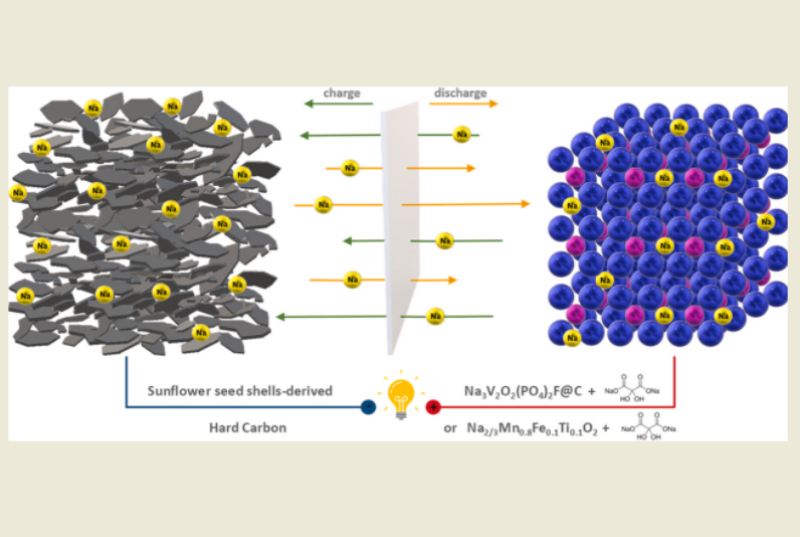
- Her team processed the material into a sunflower seed shell battery anode.
- Then, they paired this with several different cathodes in button batteries.
- These cathodes contained less-critical vanadium, iron, and titanium.
Finally, they completed life cycle tests to establish which anode-cathode combination worked best. The prototype battery with the best blend coped with up to 1,000 charge and discharge cycles.
Our batteries cannot compete with lithium-ion, Nieto admits. We need to continue searching for alternatives to this chemistry, that use biowaste that is so freely available and environmentally acceptable.
More Information
Biodegradable Battery With Natural Polymers
A Living Fungus For a Biodegradable Battery
Preview Image: Optimum Combination of Materials