The World Health Organization (WHO) has overall responsibility for categorizing virus variants in terms of global significance. Its two main categories are variant of interest (may require special local attention) and variant of concern (has wider consequences). We decided to unpack why WHO regards Delta as a variant of concern, and why this matters.
Reasons for This Shift in World Health Assessment
U.S. Centers for Disease Control and Prevention (CDC) explains the Delta variant first appearing in India shows increased transmissibility. Moreover, WHO regards Delta as a variant of concern because it potentially reduces the effectiveness of some monoclonal antibody treatments, and vaccines too.
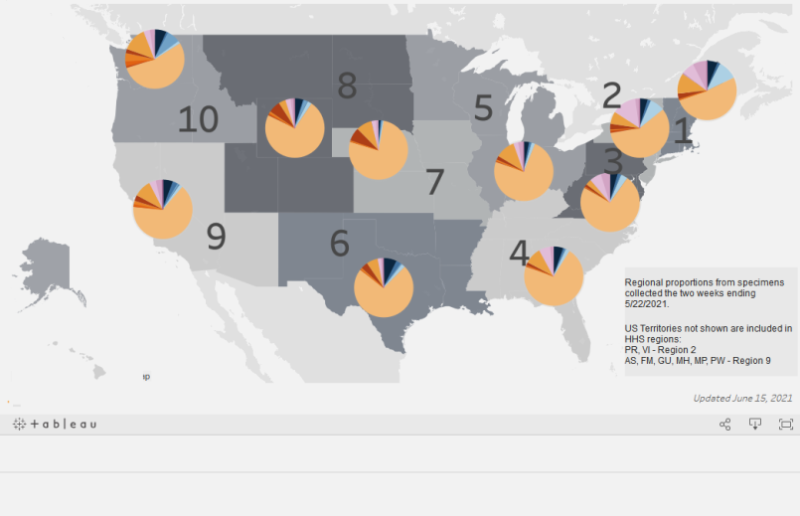
The Delta variant is also steadily replicating around the globe. However, the U.S. COVID infection rate is reducing as the number of vaccinated citizens increase. But CNN Health warned June 15, 2021 this rate could increase again, if Delta picks up speed. Currently CDC estimates it already accounted for 9.9% of U.S. new cases on June 5 this year.
U.S. Cannot Ignore WHO Warning Delta is a Concerning Variant
NIAID Director Dr. Anthony Fauci expressed his concerns at a daily White House briefing on June 8, 2021. He noted the Delta variant was in circulation in the U.S. at a rate similar to the UK tipping point. And also that that variant was now dominant in that country.
‘We cannot let this happen in the United States,’ he said according to CNN Health. And he described the ‘UK’s experience’ as ‘such powerful argument to get vaccinated.
Eric Topol is founder and director of the Scripps Research Translational Institute, and he been has tracking variants throughout the pandemic. He warns ‘Delta doubles every seven to 10 days. That means we have two to three weeks to just go flat out with vaccination to stop this trend.’
Related
How Resistant Delta is to COVID Vaccines
What Makes a COVID Variant More Infectious?
Preview Image: United States Delta Starts Spreading
YouTube Share Link https://youtu.be/01b-74ljqWc