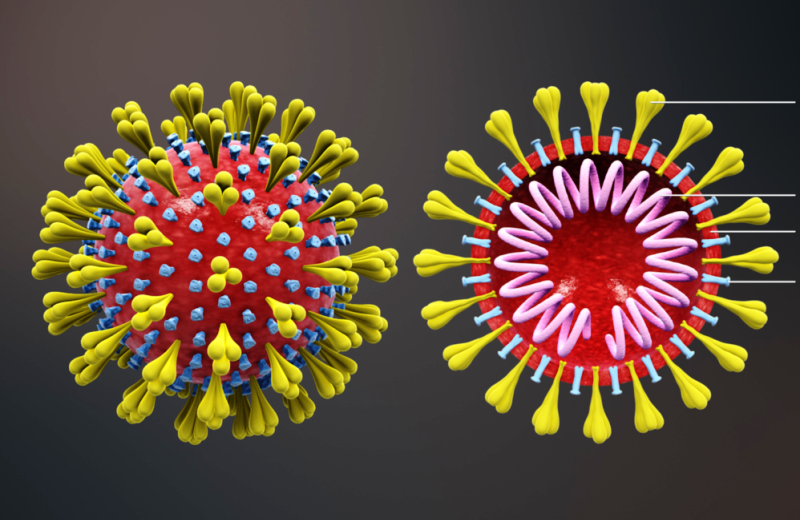
The SARS-2-Cov virus causing COVID-19 has ‘mushroom-like’ spike proteins all over its surface. However, these must latch on to human receptors called ACE-2’s on human body cells before the virus can enter. Technology Review compares this to a key needing a lock to open a door. Researchers at Grossman School of Medicine in New York have been exploring what makes a COVID variant like Delta more infectious.
How the Virus Infects Once It’s Inside the Cell
After the key opens the lock, the coronavirus proceeds to fuse with the cell. This process begins when the human host cell severs two of the ACE-2 spikes. We can compare this ‘cleavage’ process to turning a deadbolt in a lock to complete the comparison. The virus is now ‘inside’ with the door tightly closed, and it can start its work.
Researchers at Grossman School of Medicine have been studying this binding process, and are making progress. Their theory is viruses with better binding capabilities, will be ‘more efficient at finding and infecting a host cell’. They created ‘pseudo-viruses’ in their laboratory that can’t replicate, so they could tweak their binding capability under controlled conditions.
Closer to What Makes COVID Variants More Infectious
The Delta India variant is more infectious than others that appeared to date, and is already dominant in United Kingdom. The researchers at Grossman School of Medicine discovered some of the mutations in the Delta variant do enhance its binding capability.
However, this is only part of the key to what makes a COVID variant more infectious. We still need to know more about Delta’s ability to transmit to other people. Meanwhile, the researchers are confident ‘current vaccines will provide protection against variants identified to date’. Their report is currently awaiting peer review.
Related
Battles Between Spike Proteins and Vaccines
Increased Threat from Delta India Variant in UK
Preview Image: Coronavirus Showing Spike Protein