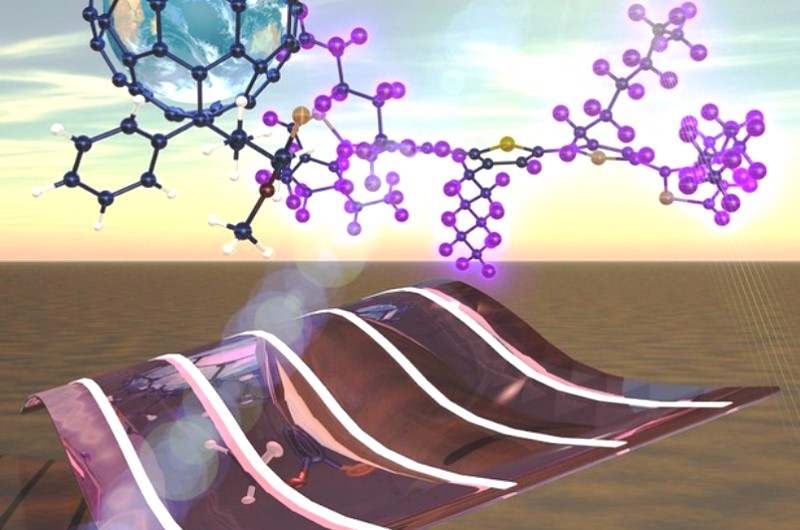
A team at Flinders University in Adelaide, Australia asked each other could organic polymer batteries beat lithium someday. That’s because many conventional batteries use rare earth elements like cobalt and lithium requiring extensive mining. Moreover, they suspected battery chemists are close to exhausting lithium’s potential, while the world’s appetite for energy storage keeps growing.
Organic Polymer Batteries Could Be Environmental Friendly
Batteries need to be Earth friendly before we can truly speak of renewable energy. If they used organic polymers, instead of rare metals torn from the earth that could be a great start. Work by the team at Flinders University suggests organic polymer batteries could beat lithium using two-electron storage.
Gizmodo published a review of their research on May 2, 2022. We understand they teamed with collaborators in China to effectively double the storage capacity of organic polymer batteries. They applied a catalysis strategy during their work. This could have improved the performance of the positive electrode.
Applying Familiar Technology to New Materials
“Catalysis has been widely used in lithium-based batteries such as lithium-oxygen, and lithium-sulfur. This improves their energy and power performance,” says Doctor Zhongfan Jia. He is a senior lecturer in chemistry at Flinders University Institute for Nanoscale Science and Technology.
The ultimate aim, he continues is to eliminate lithium waste in landfill, following incorrect disposal on account of recycling challenges. Previously restrictive organic polymer battery storage capacity could be overcome by following their catalysis strategy.
Moreover, their new battery design competes well against lithium batteries in terms of energy storage. But the clincher could be the more renewable nature of the materials. Keep an eye out for the words ‘organic polymer’ in your battery store, although you may have to wait a while longer.
Breaking News
New Flow Battery with Organic Polymers
Extend the Life of Your EV Vehicle Battery