You could build a battery with many materials you could easily lay your hands on at home. However unbelievably, a can of soda provides two of the three critical ingredients, provided you don’t drink the contents first. This one is for real folks, and suitable for kids! However, having an adult to help with experiments is always a cool idea.
To Build a Battery From a Can of Soda, You Will Need…
- A fresh can of soda unopened (any flavor should do).
- A small-size plastic cup from your favorite take out.
- A copper strip that’s long enough to stand out the cup.
- A piece of medium sandpaper as big as your hand.
OR a bunch of bare copper wires tightly twisted together. PLUS …
- A pair of kitchen scissors naturally with cook’s permission.
- Two short-ish electric cable leads with clips at each end.
- Dad’s voltage meter, so you can prove your battery works.
8 Steps to Make a Battery From a Can of Soda
- Pop open the can, and fill the plastic cup three-quarters with soda.
- Drink the rest of the soda, or pour it into another container.
- Cut a 3/4-inch-wide strip from the side of the aluminum soda can.
- Use the sandpaper to remove coatings on both sides of that strip.
- Position the aluminum and copper strips on either side of the cup.
- Make sure one end of each strip is above the rim of the cup.
- Clip one end of each wire to either the aluminum or copper strip.
- Securely connect the other ends of the wires to the voltage meter.
Explainer: How Does the Soda Can Battery Work?
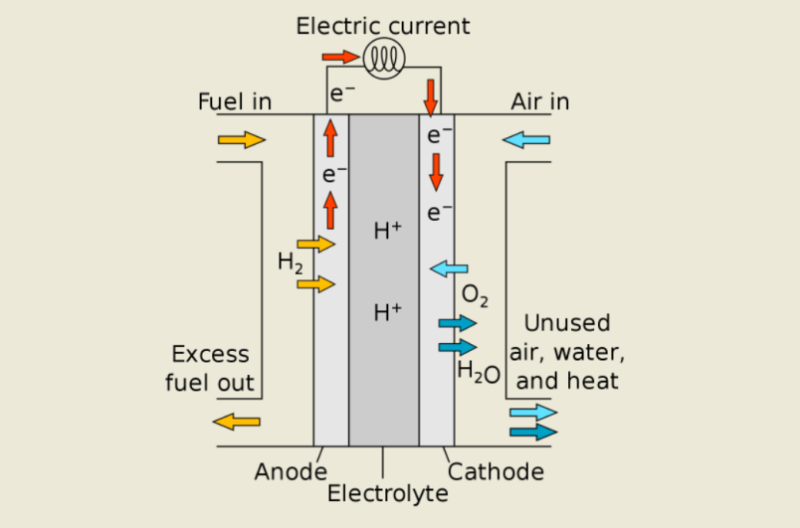
Your voltage meter should read approximately three-quarter volts. This is happening because the soda contains phosphoric acid, which sets off the chemical reaction. The process releases hydrogen gas which is the bubbles you see floating to the surface. Done and dusted, Well done, you just built a battery.
More Information
Experiments in Science: The Grove Cell
Is This the End of Lithium Battery Fires?