If you’re looking for a cool intro to our world of batteries, then this school experiment will be for you. You could be a jump ahead of the other kids in your class, when you understand how to make a battery cell at home. What’s more you should have the raw materials you need at home in the kitchen too. So it should cost you almost nothing to be part of the world of chemical science.
Materials You Will Need For this Experiment
- Sheet of aluminum kitchen foil
- A shiny new clean penny coin
- A sheet of kitchen paper towel
- A small quantity of kitchen vinegar
- A voltmeter you borrow from an adult
- Some duct tape from a helpful person
Now Let’s Make a Battery Cell at Home
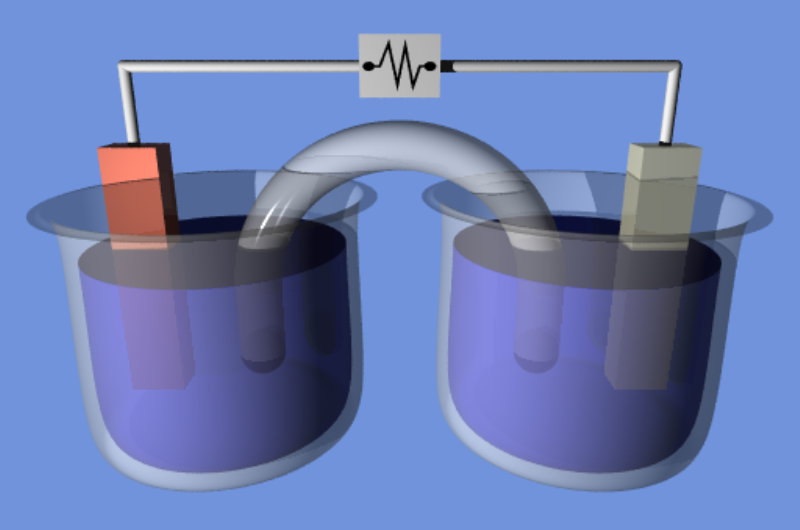
A modern battery cell has a separator between a cathode and an anode electrode. This forces their electrons to flow through an external circuit. Meanwhile, their ions shuttle through an electrolyte changing the polarity of the electrodes. In this experiment:
- The anode is the aluminum foil
- The cathode is the penny coin
- The separator is the paper towel
- The electrolyte is the vinegar
- The external circuit is the voltmeter
Fold the aluminum foil into a square about one inch per side. Follow the same process with the piece of paper towel. You don’t need to be accurate, except both squares must be larger than the penny.
Partly insert the penny between the paper and aluminum squares. Secure this pile with the duct tape, after making sure you can still see parts of the aluminum sheet and penny. Now add a few drops of vinegar to the exposed paper towel, and wait a few moments for it to sink in.
You now have a battery, but you still need an external circuit to awaken it. Connect the voltmeter wires to the penny, and the aluminum sheet. Observe the voltmeter reading. Congratulations! You now know how to make a battery cell at home.
More information
Two Experiments to Plot a Magnetic Field
Easy AA Battery Spinner Experiment