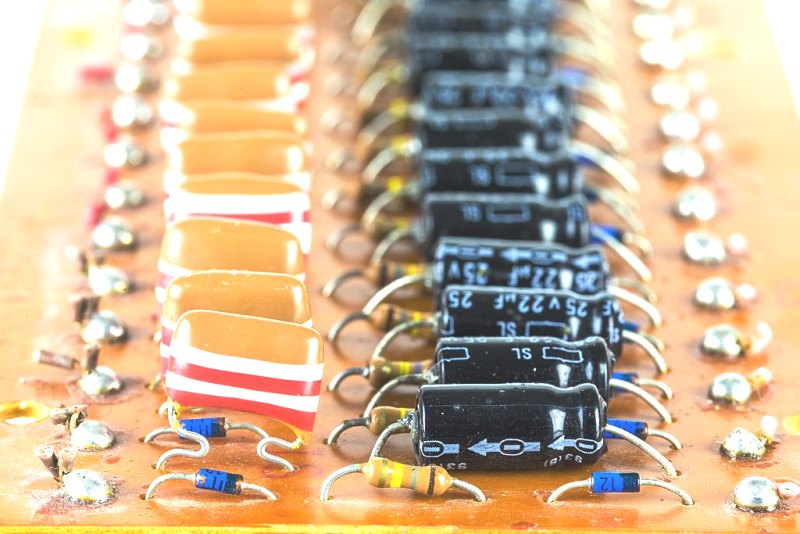
Capacitors can’t produce their own electrons, so they have to rely on external sources. We use batteries in our description, because capacitors we use personally are in portable devices. Here is how capacitors team with batteries to receive electrons from that source.
- The plate that connects to the negative terminal of the battery accepts the electrons on offer.
- While the plate that connects to the positive terminal of the battery loses electrons to that source.
Capacitors Team With Batteries and Hold the Same Charge
The electron exchange results in the capacitor holding the same charge as the battery in terms of voltage. The ones we see on circuit boards are small. However, the ones utilities use for power factor correction are as big as transformers!
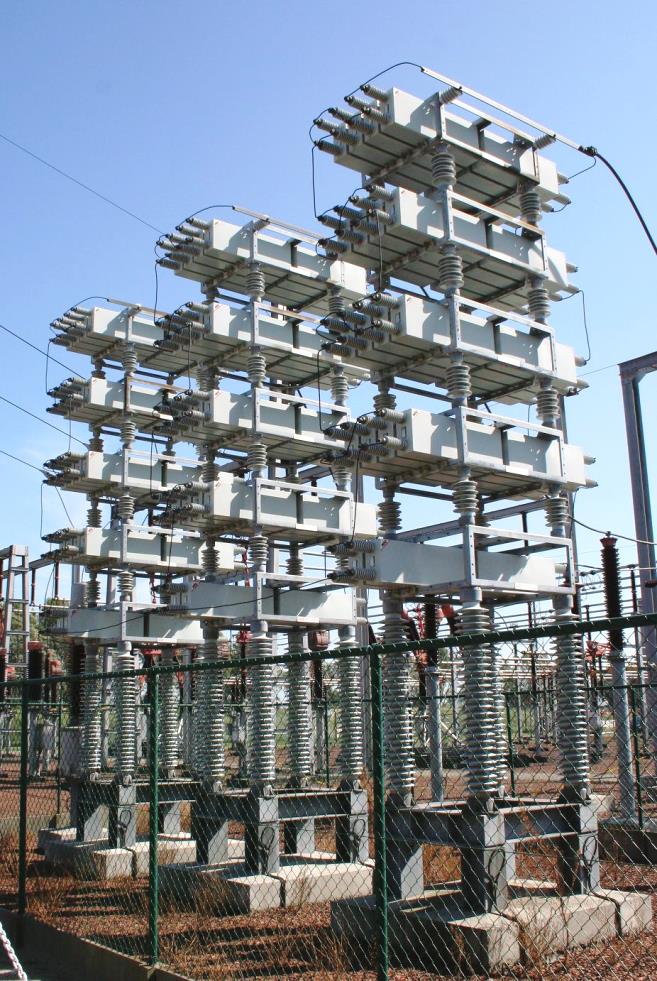
But we can also see the power of capacitors in nature. There, a cloud is one plate, and the earth or a lightening spike the other. But getting back to basics, how do we use these mini-powerhouses after capacitors team with batteries? It is real simple actually! All we need is a capacitor holding a charge.
- If we connect a decent-size capacitor between a light bulb and a battery, with the polarity right the following will happen…
- The light bulb will glow as electrons flow between the battery and the capacitor charging it up.
- However, the light bulb will dim, and go out when the capacitor is full and the electrons no longer flow.
- If we remove the battery from the circuit the light bulb will dim, and go out when the capacitor is discharged.
Modern Day Uses for Practical Capacitors
The capacitor in the above example would have to be big as a soda can. That’s impractical for an electronic circuit in a portable device, where we use capacitors differently. Their typical uses include:
- Providing instant charges for high speed use in a camera flash or laser.
- Eliminating electric ripples in a circuit by absorbing peaks and filling valleys.
- Kick starting tiny, energy-efficient electric motors so they use less energy overall.
However, that is by no means the end of the list. Capacitors are virtually everywhere!
More Information
What is a Capacitor in Simple Terms?