If storage batteries are at the heart of every portable electrical device, we are bound to find capacitors there too. These amazing downsized stores of electrical energy may seem delicate to the eye. But some pack a mighty punch and all deserve our respect. American William Dubilier invented mica condensers (capacitors) in 1915. The silver mica versions especially provided great impetus for commercial radio.
More About William Dubilier and Mica Material
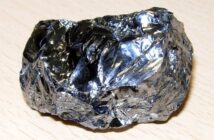
Micas are a group of silicate minerals whose crystals split away into extremely thin plates. They machine to very tight tolerances, and are both good insulators and good thermal conductors.
William Dubilier demonstrated radio transmission in Seattle in 1909, ten years ahead of commercial radio operation. He was also the first person to use sheets of naturally occurring mica as the dielectric in a capacitor condenser.
Mica capacitors were common in early radio tuning and oscillator circuitry. This was because their coefficient of temperature expansion was low. Indeed, we still find them in applications where exceptional temperature stability is vital.
The Dubilier Condenser Company commercialized the product in 1920, and this had a huge influence over rollout of commercial radio. We can’t overemphasize the role this communication medium played in many aspects of life between two world wars.
A Remarkable Account of Dubilier Mica Condensers
Our blog provides a rich tapestry of information about batteries, electricity, and electricity storage. We find remarkable records of electricity, batteries, and electricity storage buried deep on the internet.
We append a link at the end the end of this post to ‘A Record of the Invention, Development, and Use of the Dubilier Mica Condenser’. This is an incredibly rich store of information and images. It describes how early Dubilier condensers contained several ‘sections or units’ inside aluminum casings.
Each section, or unit contained (a) over a thousand alternating sheets of mica and foil, and (b) an insulating adhesive to expel any ‘air, moisture and vacuum pockets’. Finally (c) a ‘melted wax compound’ stabilized the sections, before a protective cover plate sealed the device.
More Information
The Fitzgerald Paper Capacitor of 1876
Charles Pollak’s Aluminum Electrolytic Capacitor