An electricity grid serving a community becomes potentially unstable when demand exceeds supply. This can happen across a large area, for example on a hot day when many air conditioners are running. However, the problem could also momentarily occur in a local area, in which case distributed utility backup could be a better solution.
Ausgrid Begins Trialing Distributed Utility Backup
Large scale battery-wind farms are replacing quick-start gas-turbines, and coming on line to stabilize grids during high demand periods. Individual community batteries are appearing in local suburbs with a similar goal in mind. Now Ausgrid, servicing large parts of Sydney, Australia is taking this logic one step further. Why not, they say, decentralize this support to individual electricity poles?
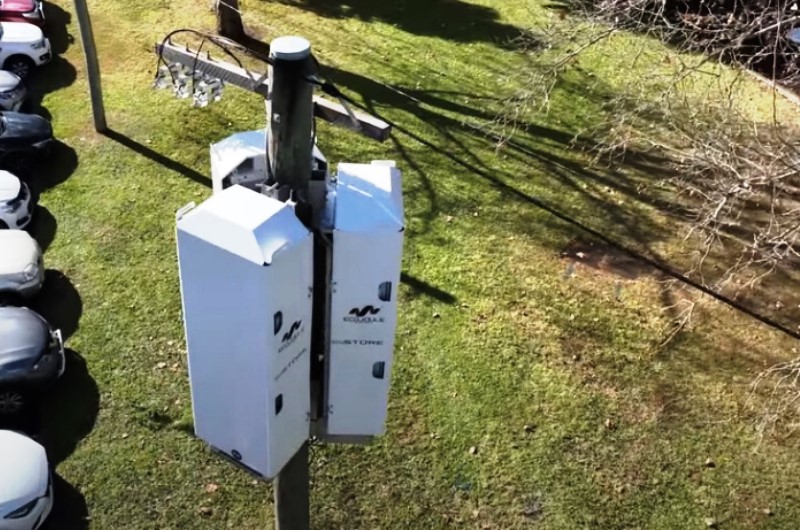
Most moments of grid instability are transient. They are often in the form of an electric light bulb dimming momentarily, if we notice them at all. Although, if we are working on a computer we might be grateful to have a deep cycle, lead-acid UPS for peace of mind. An Ausgrid distributed utility backup does something similar, except it could be at the top of an electricity pole just down the street.
But This is Only a Trial at This Stage
Wise minds implement change gradually, especially when it comes to electricity supply. And so Ausgrid has begun placing scalable batteries in strategic places in a limited distribution area first. Their overall goal is to correct the stability of the network and improve energy efficiency, both noble objectives.
The batteries are sufficiently compact to locate on electricity poles, where they easily connect to overhead cables. Ausgrid can equally easily increase, or decrease their number, as they tweak their system. The alpha pole-mounted battery was a 30kVA/60kWh community energy storage system, with more being added as the distributed utility backup trial rolls out.
More Information
New York Battery Storage For Summer
Grid-Scale Battery Storage in a Nutshell
Preview Image Sourced from Below Video