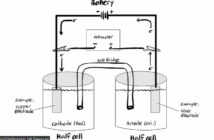
All batteries have three basic bits that make our phones work, our cars start, and our alarm batteries function. In summary form, these components are a cathode, an anode, and some electrolyte. Disposing of batteries responsibly is still a challenge. Researchers at Toronto University may have a solution.
They are seeking out smarter ways to make batteries. Their long term goal is to build a fully sustainable product comprising these core elements.
- A positive terminal attached to a cathode which is where we keep the energy until we need it
- A negative terminal connected to an anode where the used electricity accumulates until we recycle
- An electrolyte solution that keep the cathode and anode apart and prevents them misbehaving

The scientists at the University of Toronto have been musing over possible new materials for cathodes. They are hoping to make a powerful, thinner, flexible, and even transparent metal-free battery that could support the next wave of consumer electronics.
One day they hit on the idea of using something made by nature and spending less time making new material.
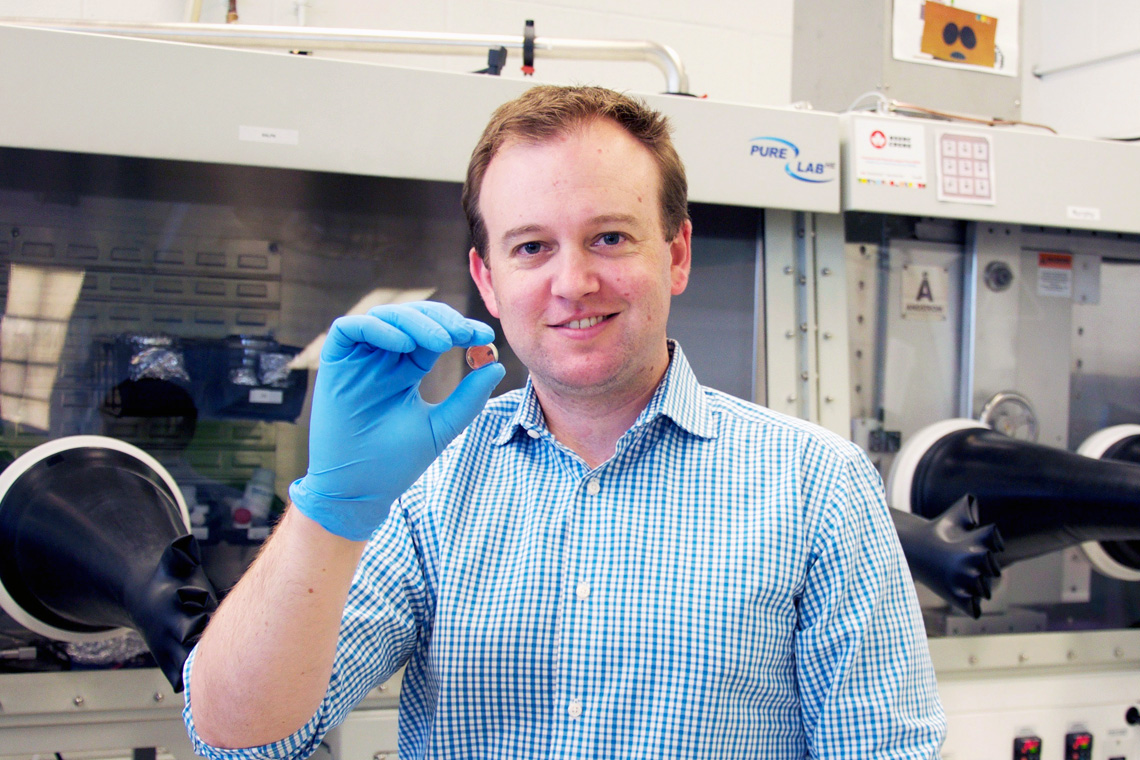
They describe organic chemistry as being ‘a bit like Lego’. What seems good in principle is often less ideal in practice. UPS Battery Center is relieved to learn that Dwight Seferos still plays with toys. We think this makes the associate professor of the uni’s department of chemistry – and the Canada research chair in polymer nanotechnology – almost human.
The team got their hands on some Vitamin B2 from fungi ‘using a semi-synthetic process to prepare the polymer by linking two flavin units to a long-chain molecule backbone’.
We are rapidly getting out of depth, but at least we will not have to eat our socks. We always knew they would find a way to make a green battery with high capacity and voltage.
The assistant prof admits he followed a long and winding road to find a natural compound that he could safely eat, although we probably will not. We will, however be eating our mushrooms on toast more reverentially in future. It is amazing what a battery of opportunities is waiting for us in nature.
Related Articles
Are batteries safe to eat? And other little science news
Calcium and Other Advances in Lead Acid Battery Technology