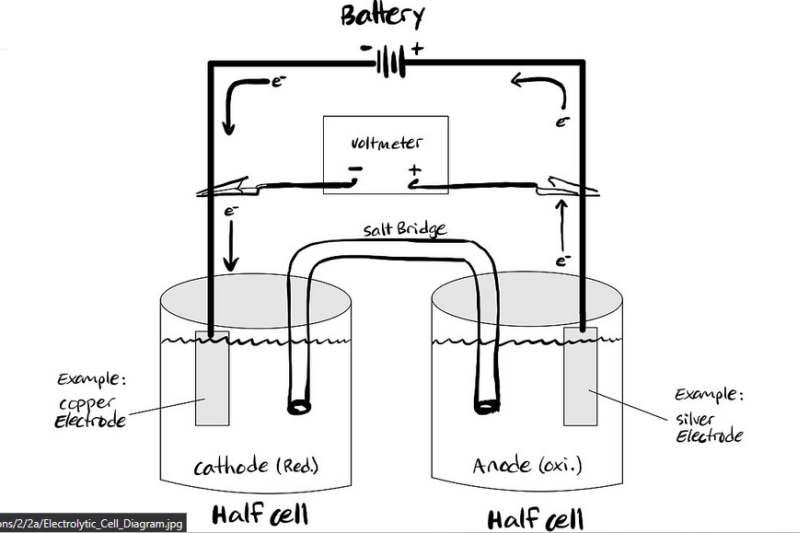
Every battery needs an electrolyte that separates the electrodes, yet allows ions to pass between them. Reports of sporadic lithium-ion battery electrolyte fires cause some to wonder, are all battery electrolytes flammable?
That Depends On The Battery Electrolyte
There are two main types of battery electrolyte in common use. These are organic (carbon-based) electrolytes and aqueous (water-based) electrolytes.
Aqueous, Water-Based Electrolytes Can’t Burn
An aqueous electrolyte is water containing a dissolved salt or acid. Take for example the sulfuric acid solution in lead-acid batteries, and the alkaline solution in many nickel-based batteries.
Aqueous electrolytes are less expensive and generally safer and less likely to contribute to fires, for the simple reason water does not burn. However, water limits the amount of energy these batteries can store.
Organic Electrolytes Hold More Power
Organic electrolytes use carbon-based liquids instead of water. ‘Organic’ means their chemicals are based on carbon atoms, as opposed to natural or environmentally friendly products.
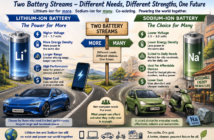
Most lithium-ion batteries, and many sodium-ion batteries, use organic electrolytes. These allow them to operate at higher voltages, and store more energy in smaller, lighter packages.
Not all organic battery electrolytes are flammable, but some of their liquids are. This means they may catch fire, if their battery overheats due to damage or an internal fault.
Where To With Flammable Electrolytes?
Battery scientists hope to bridge the electrolyte safety gap, with advanced aqueous electrolytes, ionic liquids, gel electrolytes, and solid-state designs. Although nowadays, their attention is shifting from ‘the best battery’ to ‘the best battery for the application’.
A grid-storage battery, for example, may prioritize safety, longevity, and low cost over energy density, making aqueous systems more attractive. Whereas an electric aircraft, by contrast, may require the highest possible energy density, even if that demands more complex safety measures.
More Information
Safer Nonflammable Battery Electrolyte