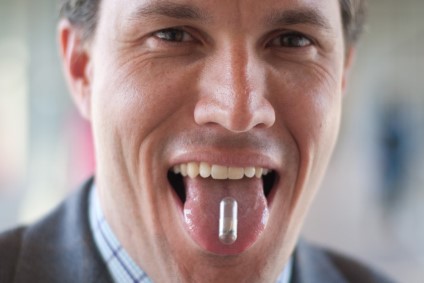
I hope you are not talking televisions and smartphones, we hear you say. Of course not. We do not want to give the enzymes in our stomachs a chance to get ahead of themselves. But, there are other applications that make melanin possibilities interesting. Ideas are flying about of ingesting a computer chip with passwords.
Our devices could log on when we come within range and gesture. Imagine if we put one in the family cat. This might make it easier to find on moonlit nights. Seriously though, swallowing a miniature camera sounds more pleasant than the tube we won’t name.
Researchers think they could make a device that could scoot down our throats and extract fish bones, false teeth, and other unmentionables. There is talk of a swimming robot that could retrieve lego from a child’s stomach. We think medical implants are more polite than a surgeon’s knife.
The problem to date is these devices need power and batteries are toxic. They also have a habit of catching alight. Quite how we would swallow a Samsung Galaxy Note 7 is another question. Chris Bettinger from Carnegie Mellon University has the answer. This is in line with its mission to ‘challenge the curious and passionate to imagine and deliver work that matters’.
Chris has hit on the idea of using melanin. This is a specialized group of cells that tints our skin and colors our hair. Melanin is also a powerful absorber of light and gets rid of 99.9% of absorbed UV radiation.
So a powerful little beastie indeed. Its ability to bind and unbind metallic ions lead Chris to the conclusion melanin is also a battery.
His team is powering a 5-milliwatt device for up to 18 hours using 600 milligrams of melanin as the active battery part. The next step is an edible battery casing made from pectin used for making jams and jellies. Oh yes please.
Related
Researchers Develop New Way to Power Medical Implants
New Lithium-ion Battery will Alert when there is the Danger of Fire
Gesture Recognition System That Runs without Batteries