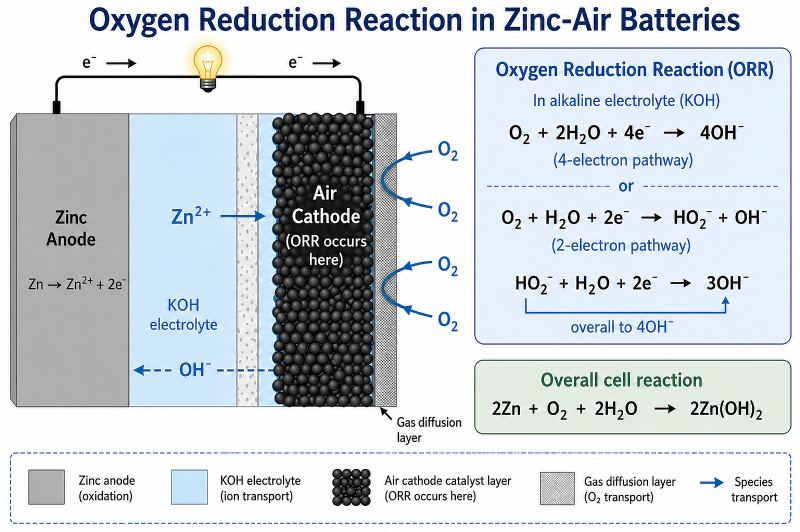
Reduction in a battery occurs when an atom or molecule at the cathode gains electrons during discharge. This phenomenon balances the loss of electrons at the anode, and creates an electric current. Researchers at Tohoku University in Japan, have developed a way of speeding up reduction in zinc-air batteries.
Why Speed Up Reduction in Zinc-Air Batteries?
Zinc-air batteries use oxygen as energy, by taking it in from the surrounding atmosphere. This causes an oxygen reduction reaction at the cathode. This is promising, however, the slow speed of the reaction restricts what we can do with the these batteries.
The Tohoku team found a way to supercharge the oxygen reduction reaction, using a catalyst of iron and samarium metallic elements. This accelerates the reduction enabling the true potential of zinc-air batteries.
They chose iron for speeding reduction in zinc-air batteries, because it is abundant, inexpensive,and chemically suitable. However, they needed to combine the iron with samarium to obtain the full potential of the catalyst.
The researchers found that zinc-air batteries modified this way, are able to power larger electronic devices, including smartphones. This has huge potential for this chemistry that currently powers hearing aids.
More About this Exciting Zinc-Air Breakthrough
The catalyst facilitated rapid oxygen reduction, while prompting superior performance in solid-state and liquid electrolyte environments.
The researchers conclude their report, which we link to below, by observing that their electro-catalyst could promote electric transport and renewable-energy storage.
It could also reduce dependence on costly materials, and promote cleaner energy use. And so, at first sight, Tohoku University in Japan, has a winner on its hands.
More Information
How A Gain in Electrons is a Reduction
Electrochemistry in Batteries Unpacked