

Researchers at Hefei Institutes of Physical Science in China announced a new discovery on May 19, 2023. They had developed a novel zinc-ion battery with an ‘ultra-long life cycle’, after they surrounded it in a weak magnetic field. We delve into their research with one simple question in mind. How fresh is this idea?
What We Know About Batteries and Magnetic Fields
Scientists have known for quite some time that a magnetic field can enhance battery performance. U.S. Department of Energy (Office of Scientific and Technical Information) earlier published related research also associated with Chinese Academy of Sciences.
That earlier, undated document details how a magnetic field ‘suppressed lithium dendrite growth for stable lithium-metal batteries’. The fresh research from China we report on here has done something similar for a novel zinc-ion battery, apparently confirming the trend.
What We Know About This Novel Zinc-Ion Battery
Rechargeable zinc-ion batteries use zinc-ions as their charge carriers. They traditionally have zinc anodes, use zinc-intercalating materials as cathodes, and have electrolytes containing zinc. In other words their chemistry is different from single-use zinc-carbon battery cells.
We already know that water-based zinc-ion batteries are a low-cost and safe alternative to lithium-ion batteries. They also have a high theoretical capacity, meaning they can store a relatively greater amount of energy. So why are they not on the market?
The Different Path the Hefei Institutes Followed
The Hefei Institutes of Physical Science research team knew that low cost zinc-ion batteries have several disadvantages:
- Poor electro-chemical performance at the cathode restricts battery potential.
- Zinc dendrites on the anode further reduce the energy density and cycle life.
The team decided they needed a breakthrough, and trialed a number of innovative ideas. Then they placed their poorly performing battery in a weak external magnetic field, and immediately noticed a difference. Their novel zinc-ion battery could recycle a great many more times, while delivering higher energy and power density. Although dendrites growth remains a very real concern, they still need to address.
More Information
Could Zinc Replace Lithium-Ion Someday?
Zinc-Air Batteries With Dual Electrolyte
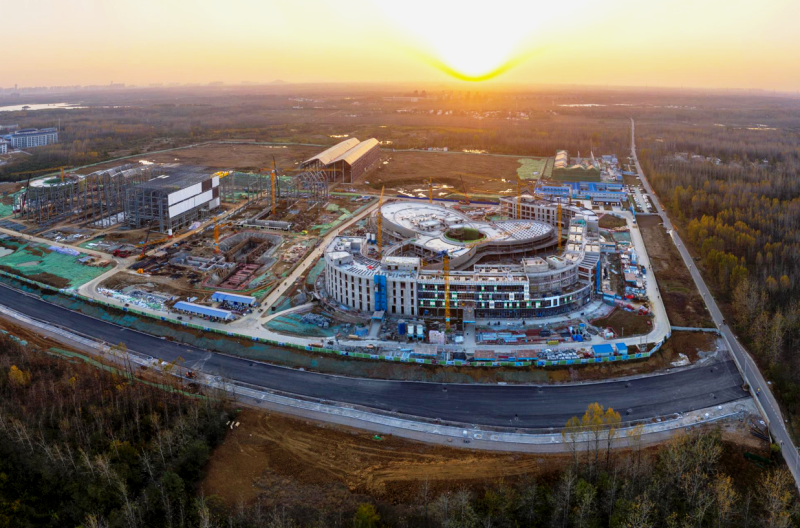
Preview Image: Hefei Institutes Tokamak Site


