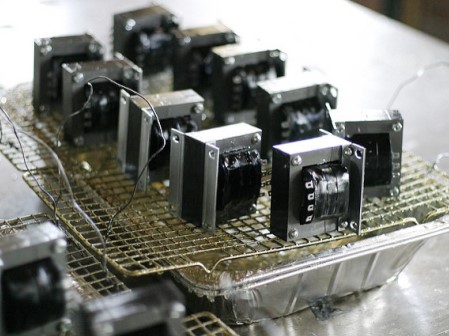
We have loads of transformers in our lives. We see them on street poles where they bring the volts down to the right level, so we can fry eggs and bacon and make toast for breakfast. We need more of them for electronic equipment because the circuit boards would cook on mains power.
Some transformers are inside large appliances like televisions, computers, and electric gate motors. Or a line-interactive ups. Where there is no room for them, they plug directly into the wall. This is great for manufacturers of multiple adapters, but unhelpful for house proud people who want the place looking neat and tidy
How Transformers Do Their Work
Here’s another neat experiment for you. However, if you are still a kid we want to ask you a big favor first. Please ask an adult to help you with it because it is quite complicated, and you will learn more that way. Do we have a deal? Great!
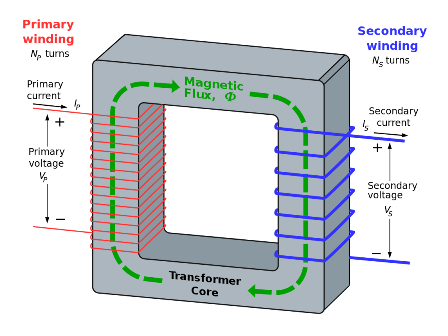
When we pass electricity through a coil it creates a magnetic field around it that flows across to nearby wires. Many loops make many volts while fewer coils make less. This is how the RED primary winding on the input side, connected to the house, transfers a lower voltage to equipment connected to the BLUE winding on the output side.
The extent to which the input current ‘steps down’ depends on the relative number of coils on either side, plus a number of other factors including more efficient materials we don’t have space for here.
And Now For the Experiment
The same principle applies when we reverse the wiring, except the voltage steps up! It has to be that way because electricity is consistent. Here’s a neat video to see how this happens. When we did the experiment ourselves, we made sure two people were present and the ‘guinea pig’ was healthy, just in case. Have fun, Enjoy!
Related