A simple diy battery contains zinc and copper electrodes in an acidic solution that keeps them separate. If we short-circuit a battery, we release a large amount of electric charge that could result in an explosion. If we interrupt the wire with an electrical device, we can consume the energy flowing between the wires. Here’s an easy experiment to illustrate these principles.

Prepare the Electrodes for the Simple Battery
Obtain six one-inch galvanized nails and a two-foot length of soft copper wire. These should be clean, shiny and new. Cut the wire into six sections each say four-inches long. Take up the first nail and tightly wind one end of a wire five times round it. Push the coil up close to the head. You should have a three-inch length of wire left over stretching straight out from the nail. Make the other five electrodes the same way.
Add Distilled White Vinegar Electrolyte
Make the electrolyte for your simple battery by filling the first six wells of an ice tray with vinegar. You want three a side so you get a ‘square’ cluster. You now have an insulated battery casing filled with electrolyte and are almost good to go.
Install the Electrodes and Light Your Life
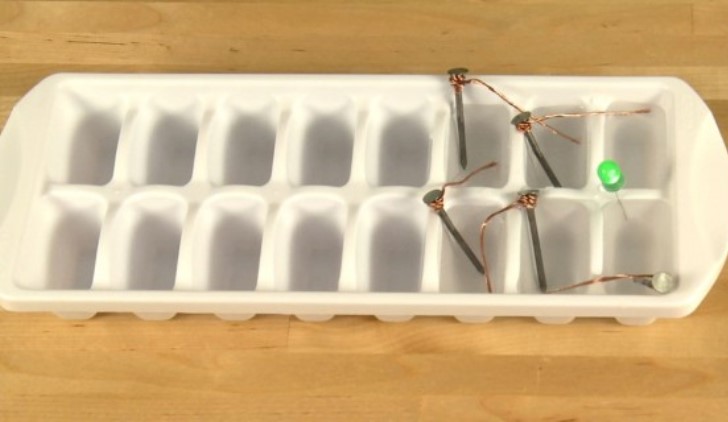
Place the sharp end of the first nail in an ice tray well, filled with vinegar. Bend the loose end of the wire across into an adjacent well. Continue the process making sure the electrodes do not touch. Bridge any two of the six wells with wires attached to an LED making sure they do not touch the electrodes.
If the LED does not light up the polarity is wrong. Turn it around and your simple battery will work. The zinc is in the galvanizing on the nails. Watch this video to see a live demonstration.
Related
How a Pile of Pennies Lights Your Life
How To Power An LED Bulb Using Graphite