An aqueous zinc-ion battery (AZB) uses a zinc anode as its charge carrier, a liquid electrolyte, and one of several cathode materials. This combination offers high safety and low cost potential, according to U.S. national laboratory Argonne. However, spiky dendrite formations may develop during charge-discharge cycles, and these can short-circuit battery life.
Researchers at UNSW Extend Aqueous Zinc-Ion Battery Life
A team at University of New South Wales (UNSW) set themselves the goal of creating safer, more cost-effective energy storage. They hoped thereby to develop an alternative to lithium-ion batteries, which have caused a number of fires.
Their press release dated January 8, 2024 details their ‘scalable solution to the re-chargeability issues of AZB batteries’. Extended benefits include ‘safety, cost-effectiveness, extended life cycle, and robust power for energy storage for homes and grids’.
The team from the UNSW School of Chemical Energy published their report in Advanced Materials journal. And so we only report the highlights to explain the gist of it here. Its worth noting that Yuan Shang, Priyank Kumar, and Dipan Kundu spent three years developing their aqueous zinc-ion battery solution.
What the Team at UNSW Discovered Over Three Years
The researchers already knew that the amount of corrosion on the zinc anode limited the ability to repeatedly recharge. After much experimentation, they discovered that adding a 1% additive by volume to the electrolyte did the trick:
- The non-toxic additive prevented corrosion and reduced the dendrites zinc deposits.
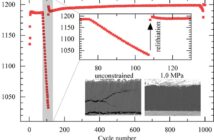
- This improved battery life by five-to-fifteen times under laboratory conditions.
- This translates to increasing battery lifetime from a few months to more than three years.
- In practical terms the density equates to 30Wh/kg, using small pouch-type cells.
These results are approaching those of competing li-ion systems, according to the press release. The team aims to make further developments given the promise of their tests so far.
“Other than remote / off-grid power systems, data centers, backup power systems in industry, and e-bikes count among some of the applications to which the AZB technology can be extended,” a delighted Priyank Kumar affirms.
More Information
Could Zinc-Air Batteries Beat Lithium-Ion?
Novel Zinc-Ion Battery in Magnetic Field