Lithium-ion batteries opened the door to high-energy storage for renewables. However, their critical constituent materials are in limited supply, and their liquid electrolyte may become unstable. Hence, the campaign is ongoing for alternative, rechargeable storage. A new electrode binding agent for sodium-ion batteries may be a way forward.
Sodium-Ion Batteries Need an Electrode Binding Agent
Sodium-ion chemistry appears to be a promising alternative to lithium-ion. The vast amounts of sodium in seawater, and salt deposits could be a never-ending supply. And moreover, the electrolyte is far more stable.
However, for this to be practical as Tech Explore points out, a thin solid electrolyte interface is necessary for the ions to shuttle smoothly as a battery cycles.
The solid electrolyte interface (SEI) is a passivation layer formed on the surface of battery anode materials produced by electrolyte decomposition. The quality of the SEI plays a critical role in the cyclability, rate capacity, irreversible capacity loss, and safety of batteries. (Source: RSC Publishing)
A slim, smooth SEI layer promotes reliable, long-term battery performance. Whereas an uneven, thick and structurally weak passivation layer consumes more electrolyte, and deteriorates battery performance. The research we discuss here concerns an electrode binding agent for sodium-ion batteries that overcomes this.
Adding a Binding Material to Carbon Anodes
A professor and a student at Graduate School of Advanced Science and Technology in Japan, applied their minds to the carbon electrodes used as anodes. These have not previously performed well in sodium-ion batteries, because they form an uneven, thick and structurally weak solid electrolyte interface layer.
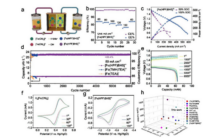
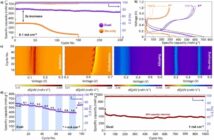
The scientists developed a novel carbon anode using a “poly(fumaric acid)’ (PFA) binder. Unlike other alternatives that cause slow diffusion of sodium-ions in the anode, their innovation accelerates the process, by allowing the sodium ions to ‘adhere to the electrode more strongly’.
More Information
Prussian White Cathodes Enhance Sodium-Ion
Sodium-Ion Future And What It Might Be