Scientists at University of Pardubice in Czechoslovakia, have developed a way of actively managing lithium-ion batteries. This makes so much more sense than allowing them to go their own way. So let’s dive in and discover how this idea works in practice.
Onboard Sensors Managing Lithium-Ion Batteries
The Pardubice team have developed novel, original sensors that noticeably extend the lifespan of lithium-ion batteries. They envisage a new generation of ‘smart batteries’, able to detect their own problems, and respond to them.
A specialist team from the University’s Faculty of Chemical Technology has been working on the project since 2023. They have been developing sensors to monitor temperature, state of health, and other parameters inside batteries.
“We have developed new types and designs of sensors that are extremely sensitive. And capable of measuring even very small changes directly inside batteries,” explains Tomáš Syrový”. He leads this interesting research, and is applying for international patents.
Actively managing lithium-ion batteries in this way, brings us closer to a new generation of smart batteries, Tomáš continues. He believes his sensors could play a significant role in future electric transport, bulk energy storage, and electronics too.
Nuts and Bolts of Lithium-Ion Sensors
The University media release is thin on the details, other than mentioning that the thin printed sensors are extremely sensitive. So we went back to a 2023 report for more detail, that we also link to below.
At that time, the team were already conducting preliminary research on rechargeable batteries. Their sensors were already in direct contact with electrolyte and electrodes, and able to measure various parameters.
That’s about all we can tell you about this for now. The team at University of Pardubice are understandably playing cards close to their chest. We hope to be able to get back with more information, once those international patents are in place.
More Information
Smart Clothing With Fiber Batteries
Pressure Sensors in Batteries For Safety Sake
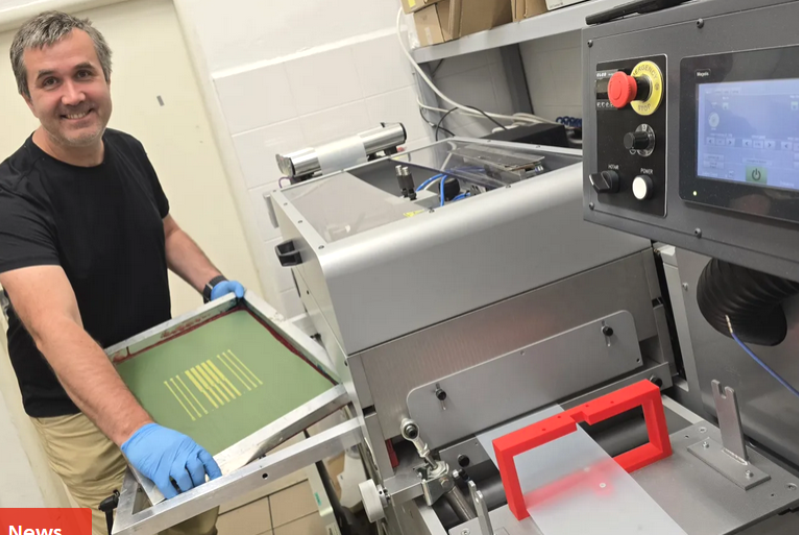
Preview Image: Laboratory at University of Pardubice