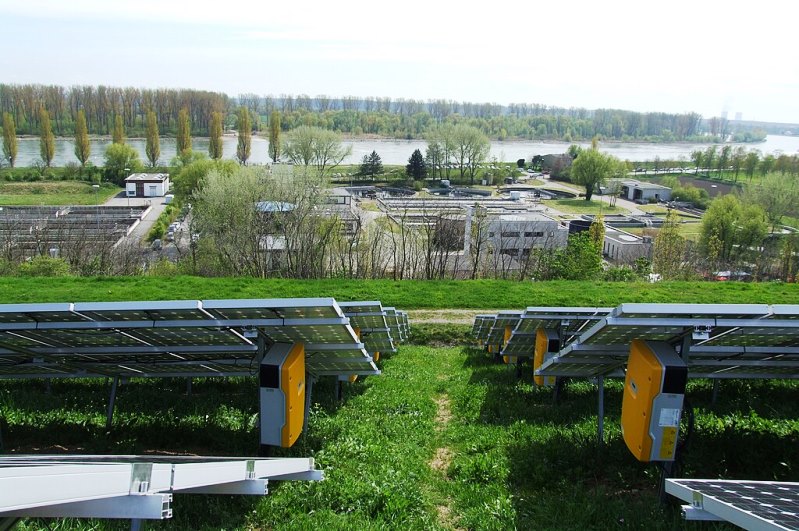
We could not use renewable energy without inverters processing it first. That’s because renewables send direct current to batteries, and our devices use alternating current. There’s an interesting history that got us into this situation. Read more about the ‘War of the Currents’ we link to below. For now, let’s stick to our topic of inverters and batteries and renewable energy.
How Inverters and Batteries Deliver Alternating Current
Solar panels and wind turbines send direct current to batteries, which store it as electro-chemical energy. They release this energy on demand, and send their direct current to inverters for processing.
In simple terms, inverters switch the direct current back and forth very rapidly, converting it to alternating current. After further filtering, inverters send a clean, repeating sine wave to the grid or user.
All raw electricity begins its life as direct current, whether it originates from a coal station, a nuclear reactor, or a gas turbine. Inverters and batteries enable us to store this energy for future use, including in our laptops and smartphones.
Inverters of The Present, and For Future Use
If we have renewable power, then our inverter may do more than manage the direct current / alternating current interface. It may also monitor the health of the system, communicate through a network, and operate independently if the grid goes down.
At the current moment, inverters and batteries still work as minor partners to the grid. However, the supply balance is shifting, and we could eventually reach the point when power stations are secondary to renewable energy. We are not at that point yet, but we need to prepare.
Inverters of the future will learn to respond to changes in grid frequency, and other disruptions according to U.S. Department of Energy. We could say that inverters are the ‘brains’ of electricity, while batteries are a store of that energy.
More Information
Two Types of Electric Power Inverters