We use batteries in flashlights, cellphones, and laptop computers, without giving them a second thought. Those energy storage devices come in all shapes and sizes too, yet the chemicals inside them follow the same principles. We’ll briefly summarize these fundamentals first. Then we’ll show you how to assemble a battery in the kitchen with coins, salt, vinegar, and water.
The Operating Principles Behind Every Battery
There are two different pieces of metal inside all popular batteries, and we call them electrodes. Then there is also a liquid or paste electrolyte separating these. The parts of the electrodes we call terminals stick out through the cases of every energy storage battery.
However, the battery does not actually work until we connect its terminals to an external circuit. This could be a wire, an LED bulb, or a circuit board inside a device. This connection enables the battery to release its electrons so the electricity can flow.
Let’s Assemble a Battery to Show Our Classmates
We will need to gather some bits and pieces together before we can start to assemble our battery:
- Some vinegar, salt, water, and a small glass bowl.
- Four or five United States penny and nickel coins.
- Some kitchen aluminum foil, and washing up liquid.
- Kitchen scissors, paper towel, and a ceramic plate,
- Your pocket multi meter, and a pen and paper for notes.
Mix one part vinegar with three parts water so you have one cup of liquid. Add a tablespoon of salt, and stir thoroughly in the bowl to make the liquid electrolyte. Clean the nickels and pennies using the washing up liquid. Rinse them thoroughly so you can use them as electrodes.
Now take up a piece of aluminum foil say two centimeters by eight centimeters long. Then fold it lengthwise in three to complete the lower conducting terminal. Next, soak small, penny-sized cutouts of the paper towel in the electrolyte.
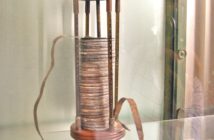
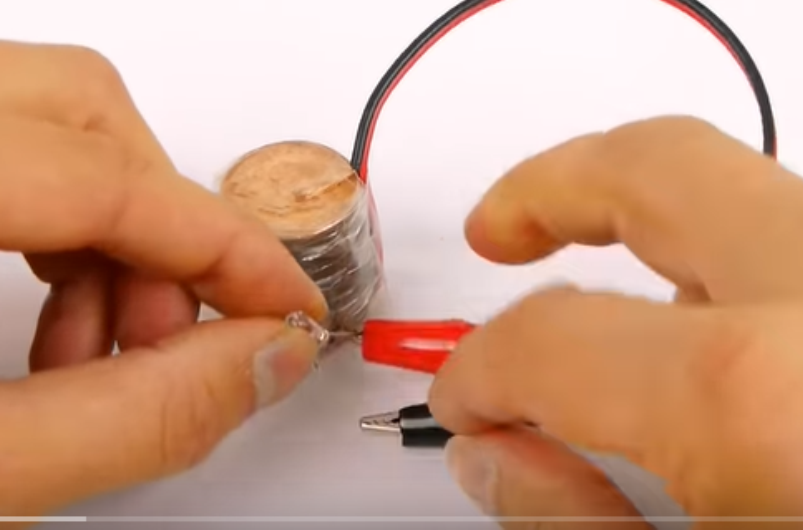
Now start building your battery on top of the lower aluminum foil conductor. Create sets of one penny, one piece of soaked paper towel, one nickle and so on until you have a stack of four complete sets.
Set your multi meter to measure volts, and choose the lowest setting available. Touch your multi meter probes to the top coin, and the aluminum strip at the bottom respectively. Reverse the probes if you don’t get a reading. When you do get one you will know you have successfully assembled a battery.
NOTE: The video uses pure, not diluted vinegar, and aluminum foil disks instead of nickels. There are a number of other varieties to experiment with as you explore the wonderful world of batteries.
More Information
How a Pile of Pennies Lights Your Life
Cruickshank Trough Eliminates a Pile of Woes