Terminals perform two essential roles without which batteries could not function meaningfully. In the first instance, they are the conduit for the energy with which we charge them. While in the second, they deliver their stored energy to external circuits when we use them. Battery terminal corrosion can weaken these dual energy flows between lead batteries and their environment. We explore this phenomenon, and explain how to limit this effect.
The Warning Signs of Battery Terminal Corrosion
No transmission system is without energy losses, depending on its materials and design. The trick is to keep lead battery connections firm and clean to limit this. This is why starter batteries do need basic maintenance under the hood, which is often a hot and dirty place.
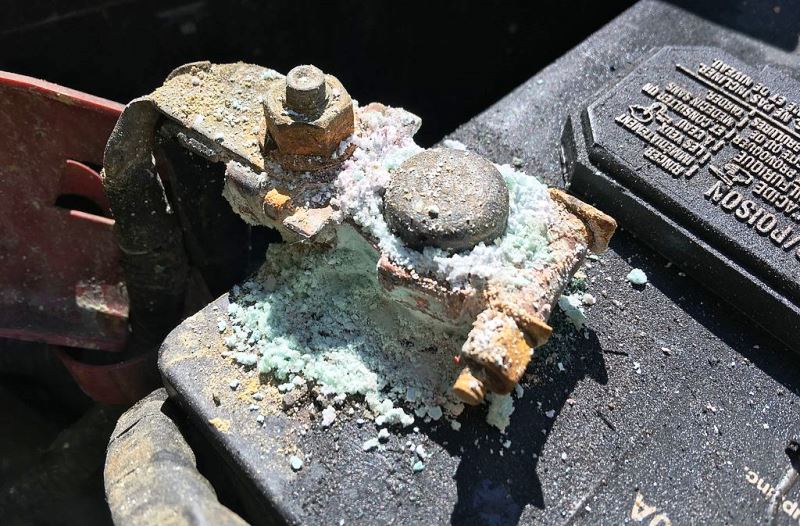
Battery terminal corrosion is a good starting point, because, if left unattended it can cause terminal deterioration, and affect performance of other parts of the starting system. Fortunately, it is fairly easy to spot, because it presents as a white, green, or blueish deposit gradually covering the battery connections, exposed cables and posts.
The Root Causes for This Condition
This white, green or blueish deposit is not something we may choose to ignore, unlike other dirt under the hood. That’s because it can cause increased resistance to current flow, partly disrupting the electric current. We therefore need to take a two-pronged approach in dealing with this common problem, namely preventing and removing it.
Terminal corrosion is the outward sign of the presence of hydrogen gas. This may be due to an over-full battery, or leakage through a damaged case. Over-charging a battery causes the electrolyte to expand. This can also cause the chemical reaction as the electrolyte escapes past the vent caps.
However, battery terminal corrosion may also be the sign of battery aging, as the lead-acid technology reaches the end of its design life. Fortunately, cleaning the outward sign of these various issues is relatively simple.
- Inspect the terminals and battery case for any damage. Have this fixed.
- Otherwise, gently remove any loose gunk with a soft wire brush first.
- Then, wash the terminals and connections with a baking-soda solution.
Finally, help prevent a repetition by coating the terminals and connecting lugs with petroleum jelly, to isolate them from any hydrogen gas that escapes during use.
More Information
Different Battery Types & What Happens Inside
Battery Fundamentals and Flow of Electrons
Preview Image: Battery Terminal Corrosion