

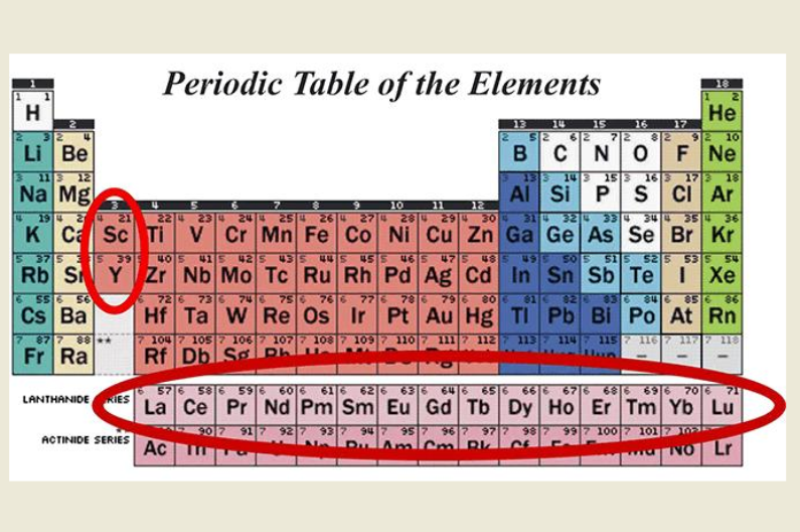
The European Climate Infrastructure and Environment Executive Agency, has launched the LIFE INSPIREE program to recycle rare earth materials. It wants to move on from imported rare earth to recovered metals, and so enhance its energy independence. This project will ‘mine’ rare earth materials in the household appliances people throw away.
Why Recover Rare Earth Materials Previously Imported?
Earth-based permanent magnets are of particular interest to the European Commission. They occur naturally in Earth’s crust, and retain their magnetism without needing external sources.
And moreover, rare earth-based magnets are indispensable in various critical sectors. These include renewable energy, electric mobility, and several types of electronic and industrial equipment.
The European Union wants to to move forward from imported rare earth, to recovered metals. This is because mining them locally is tricky, due to geological and processing challenges.
Are These Scarce Materials Used in Batteries?
Well, first of all, the ‘rare metals’ are not actually scarce. In fact, they are abundant, but the catch is they only exist in low concentrations in certain ores.
They may feature as additives in some lithium-ion, sodium-sulfur and lead-acid batteries. However, only nickel-metal-hydride products include a rare earth alloy at their cathode, according to SNECI industrial consultants.
The LIFE INSPIREE Approach to Recovering Rare Metals
The European Union’s LIFE INSPIREE project we touched on earlier, is developing a method for extracting rare earth metals from used equipment. The devices of special interest to them include wind turbines, computer hard disk drives, electric motors, household appliances and other electronic waste.
The project aims to begin recovering 700 tonnes of valuable rare earth elements each year, from discarded equipment The recovered materials will include neodymium, palladium and dysprosium, as defined in the EU Critical Materials Act.
More Information
Homopolar Motor Using a Rare Earth Magnet
Anode-Free Metal Batteries – Back to Basics
Preview Image: All the Rare Earth Metals


