Fast charging lithium-ion batteries almost seems to have become a national pastime, as electric vehicle owners tackle range anxiety. They want to be able to recharge as fast as topping up with gasoline, and then travel as far. This urge is perfectly understandable, but it is also a major cause behind the shift back to gasoline-power vehicles.
What Fast Charging Does to Lithium-Ion Chemistry
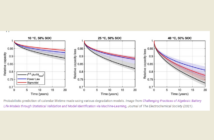
We first came across the problem with fast charging lithium-ion batteries in 2019, when we read the review we link to below. Researchers from Imperial College, London reported using high currents reduced energy efficiency, and caused accelerated capacity and power fade.
One unanswered question is what this does to electric vehicle warranties, especially where vehicle makers equip their offerings for ultra-fast charging. Certainly, they seem to be scrambling for alternatives to lithium-ion, with solid-state lithium and sodium-ion front runners.
Ultra-fast charging lithium-ion batteries involves forcing higher-than-normal voltages for five minutes, or more. This strains the battery, as the current overcomes resistance. Sustainability Times suggests the shortcut ‘can decrease battery life by as much as 40%’.
Could Range Anxiety Be Behind E-Delivery Bike Fires?
We have delved deeply into e-delivery bike fires, in previous blog posts on this website. Our research has taught us that their operators (and perhaps ride-hailers too), leave spare lithium-ion batteries charging while they deliver their services.
This extra expense must surely come as a burden in a heavily-competitive industry? Could the desire for savings be behind the surge in sales of low-priced batteries, without Underwriters Laboratories (UL) certification? This certainly is something to ponder over in our evolving world of batteries.
Perhaps the answer lies in a new range of less-aggressive ultra-fast chargers? As an interim measure, Car News China suggests electric vehicle owners consider the following advice:
- Only ultra-fast charge vehicles for 40% of their total sessions.
- Cease ultra-fast charging when the vehicle battery is at 90% charge.
- Never ultra-fast charge a battery with a charge of less than 10%.
Fast charging lithium-ion batteries when they are below 10%, or above 90%, could seriously damage the battery, and even lead to a thermal runaway fire!
More Information
Ultra-Fast Charging Batteries – Major Advance
Ultra-Fast Battery on Horizon in China