Lithium-ion chemistry is dominating North American markets, but there are growing concerns according to University of Houston. That’s because lithium metal is relatively scarce, expensive and difficult to source they say. And moreover, “may soon be at risk due to geopolitical considerations”. The university made this statement as a backdrop to a discovery offering a new boost to alternative sodium-ion performance.
How This New Boost to Sodium-Ion Performance Matters
Researchers at University of Houston have developed a battery material, sodium vanadium phosphate (NaXV2(PO4)3. This new compound improves sodium-ion battery performance by 15%, through increased energy storage density.
The higher energy density of 458 watt-hours per kilogram, compares favorably to the 396 in older sodium-ion batteries, The new sodium vanadium phosphate material therefore brings sodium technology closer to competing with lithium-ion technology.
“Sodium is nearly 50 times cheaper than lithium, and can even be harvested from seawater. This makes it a much more sustainable option for large-scale energy storage,” according to the lead researcher.
“Sodium-ion batteries could be cheaper and easier to produce, helping reduce reliance on lithium, and making battery technology more accessible worldwide.” But how did the University of Houston team achieve their breakthrough?
From Chemical Theory to Sodium Battery Reality
The Canepa Lab at University of Houston, works to discover new molecules and materials that advance clean, carbon-free technology. They corroborated with too many other researchers to mention here. Please follow the link at the end of this post to the news item, if you are curious to know who these were.
The sodium vanadium phosphate enabled the sodium ions to flow smoothly, while charging or discharging the prototype battery. And this in turn meant that the battery “worked as a single-phase system.” It delivered a continuous 3.7 volts, higher than the 3.37 volts in existing materials.
“The continuous voltage change is a key feature,” a laboratory specialist explains. “It means that the battery can perform more efficiently without compromising the electrode stability. That’s a game-changer for sodium-ion technology.”
More Information
A New Sodium-Ion Era Dawns at Argonne
Zinc-Vanadium Chemistry For Storage
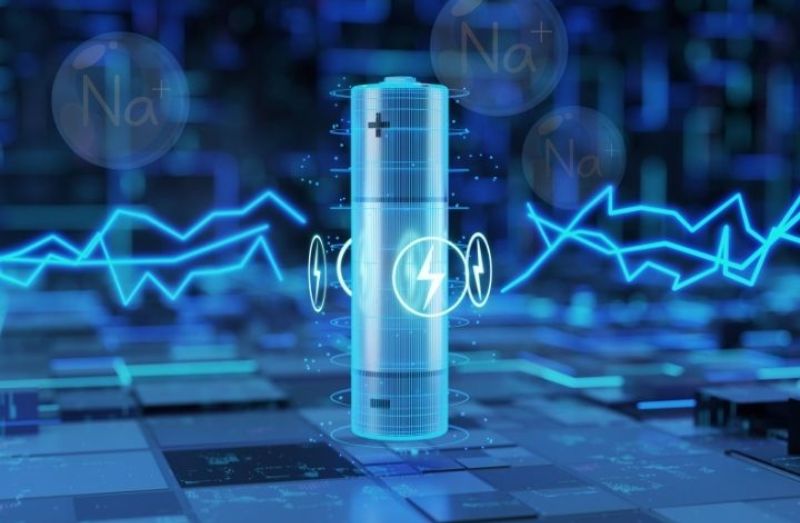
Preview Image: New Type of Material for Sodium-Ion