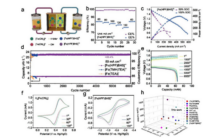
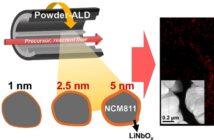
Scientists from the Thin Film Materials Research Center of Korea Research Institute of Chemical Technology (KRICT), have made a dramatic breakthrough. They have extended the length of anode-free solid lifespan by a factor of seven. All they needed was a special thin film, and knowing where to place it. Could this be the leap forward our world of batteries has been waiting for?
Why Do We Need Anode-Free Solid Batteries?
The first generation of lithium-ion batteries have liquid electrolytes, that bring with them these two disadvantages:
- Uneven lithium plating on their anodes during discharging, can form into sharp dendrites.
- These dendrite growths can penetrate the separator, and cause short circuits or fires.
Solid state batteries (SSB) with solid electrolytes are a first step towards resolving these two drawbacks. The Springer Nature report we link to below, confirms this arrangement offers enhanced safety, higher energy density, and stable performance at low temperatures.
Anode-free all solid state batteries (AFASSB) take this improvement a logical step further, in the drive for smaller, lighter batteries. They eliminate the anode completely, removing the possibility of dendrites forming. So the lithium ions shuttle to the current collector, and plate there instead.
So Why Do We Need The Special Thin Film?
That’s a good question, that the KRICT discovery seems to answer. You see, the current design for AFASSBs may well increase battery density by reducing cell volume. However, this comes at a cost.
The repeated lithium plating and stripping at the current collector often causes instability. This reduces the anode-free solid lifespan, and cycle life of the AFASSB battery. Previous costly metal coatings failed to resolve this.
And so the KRICT scientists turned their attention to a less obvious two-dimensional, thin molybdenum disulfide (MoS2) coating. This material is a common constituent in greases, twisted nanowires, piston rings, space shuttle bearings, and more besides.
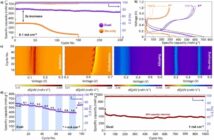
The molybdenum disulfide worked a treat. The thin film facilitated an anode-free solid lifespan of 300 hours continuous operation, representing a seven-fold improvement. KRICT President Young-Kuk Lee was clearly delighted with his team’s achievement.

More Information
Facts About Li-ion Batteries’ Calendar and Cycle Life
Deep Cycle Lead Battery Lifespan