How thick is 2.5 nanometers actually, and does it really matter in the greater order of things? Scientists at Department of Materials Science and Chemical Engineering at Hanyang University in South Korea, found it was the key to a secret.
To put this matter into perspective, a single strand of human DNA is roughly 2.5 nanometers in diameter. Or, to bring things closer to home, a single lithium ion is roughly 0.15 to 0.18 nanometers across.
How Nanometer Thickness Matters in Batteries
We’re not kidding, things really do get that small in the world of batteries. There, scientists are making good progress with sulfide-based, all-solid-state batteries, except one thing is still holding them back.
This something has been the point where cathode active materials and sulfide-based solid electrolytes contact each other. In other words, where the lithium ions begin their journey to the anode.
We can’t do anything about the diameter of lithium ions. All our scientists can do is ‘tweak’ that interface with an intermediary interphase material. This needs to both improve the interface and let the ions pass through.
The Actual Filling in the Sandwich – Nanometers
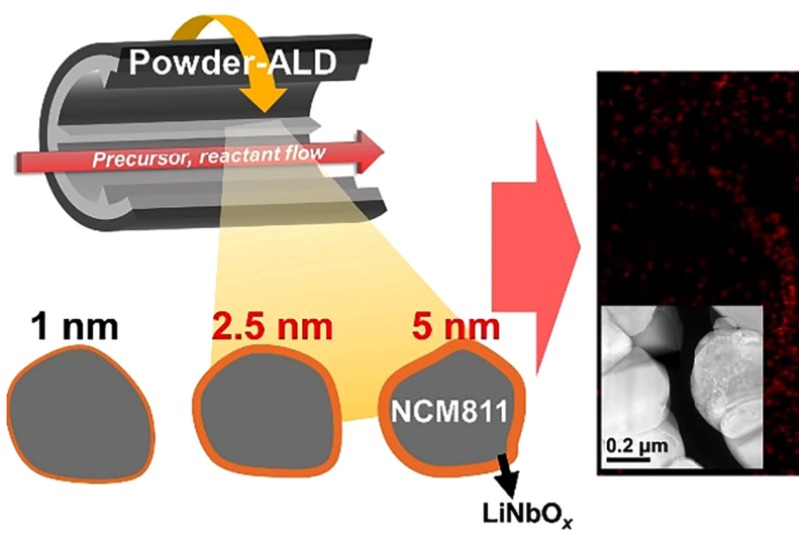
Now we know how thick 2.5 nanometers is, as well as the diameter of lithium ions, we can get to the filling in the sandwich. Coating the cathode surface with an intermediary layer can act as a bridge between the materials.
This coating helps stifle the unwanted side reactions. Although logically, the thicker it gets, the more it starts to impede the flow of lithium ions. Keeping the coating thinner than 5 nanometers seems to do the trick.
But the scientists at Hanyang University in South Korea, were curious to know the optimum point in this range. In other words, the precise interphase thickness that balances side-effect suppression with smooth ion flow.
After many trials they determined that 2,5 nanometer thickness is the optimum point in sulfide-based all-solid-state batteries. That’s extremely thin, but at least we know how thick 2.5 nanometers actually is.
More Information
Solid–Electrolyte Interphase – Dramatic News
Thin-Film Coatings on Solid State Batteries
Preview Image: The Filling in the Sandwich