Zinc-bromine batteries (Zn-Br) use a chemical reaction between zinc metal and bromine, to produce electric current. Zinc-metal is stable and less-costly than lithium-metal. This chemical combination could be a potential candidate for flow batteries, especially now science found a way of scavenging corrosion from Zn-Br batteries.
Why Scavenge Corrosion from Zn-Br Batteries?
Researchers from Chinese Academy of Sciences were interested in taking zinc-bromine chemistry to the next level. But they had one big problem standing in their way. The inexpensive zinc bromide-based aqueous electrolyte is highly corrosive. This negatively affects the performance, and lifespan of the flow battery.
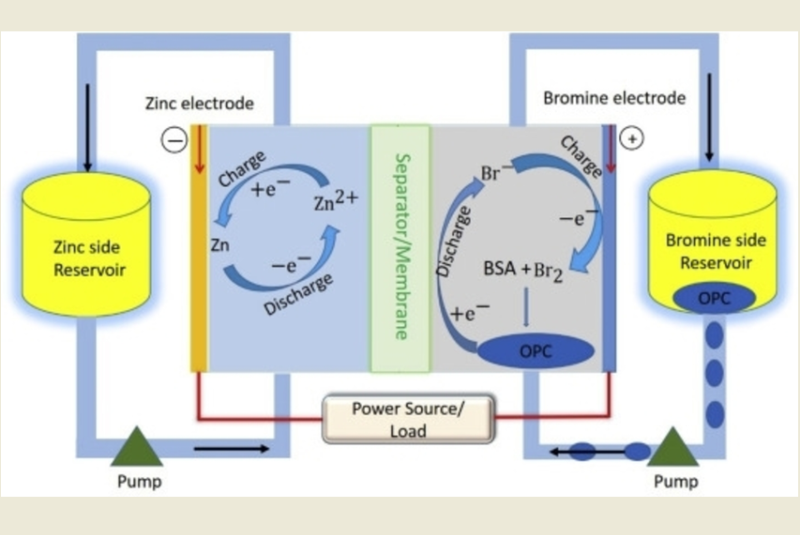
Zn-Br flow batteries are otherwise highly attractive, because their active solutions are relatively cheap, and they have high energy storage density too. They store their electrical energy, and release it by pumping the active chemical solutions past each other, so they can exchange ions.
But science would first need to find a way of scavenging corrosion from Zn-Br batteries, before commerce took the idea further:
- Zinc ions accumulate on, and plate the negative electrode during charging.
- Bromide ions simultaneously oxidize to bromine at the positive electrode.
- The zinc plating dissolves back into the electrolyte during discharging.
- While bromine reverts back to bromide, releasing energy from the battery.
But there’s a catch to this apparently ideal world. You see, the bromine that oxidizes during charging is highly corrosive. It soon starts destroying the electrodes, and even the metal storage tanks, as it releases irritating pollutants into the atmosphere.
How Science Tackled This Bromine Corrosion
The team at Chinese Academy of Sciences knew they needed to find a way to disable the disruptive bromine. Several failures later, they stumbled over a fairly common catalyst, sodium sulfamate, that did the trick.
The sodium sulfamate bound the bromine into a neutral product, effectively scavenging most of it out the system. This enabled the zinc-bromine battery to increase its energy storage density by 50%, while completing over 700 charge-discharge cycles in good working order.
More Information:
Zinc-Bromine Batteries Deliver Solid Service
A Flow Battery For Your Home At Last?
Preview Image: Zinc-Bromine Flow Battery