Texas A&M University researchers are chipping away at an age-old challenge. We select battery materials that work well at room temperature, and then discover they don’t work well outside this range. A Texas A&M team has developed batteries that thrive in icy weather, and are happy at room temperature too.
Why We Need Batteries That Thrive in Icy Weather
Extremely cold winter weather can immobilize electric vehicles, and leave backup batteries dysfunctional. To understand how this happens, we need to dip into battery science:
- Conventional batteries contain liquid electrolyte that allows a charge to flow through them.
- But, if the electrolyte freezes, then a charge will not flow during discharging and recharging.
- The battery ‘locks up solid’. Our UPS does not work. Our electric car is stranded where we parked it.
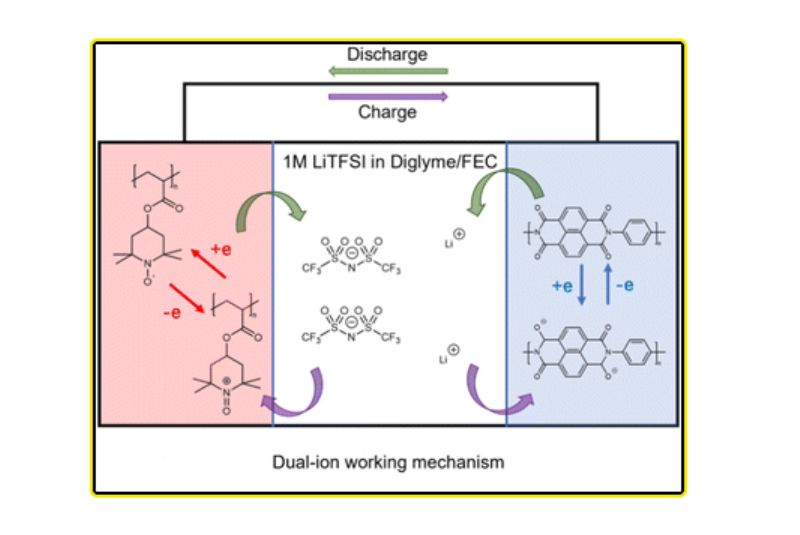
The Texas A&M University team invented a battery that keeps working in temperatures as low as – 40º C (- 40º F). “We were able to do this,” they explain, “because we replaced the liquid electrolyte that freezes, with a different electrolyte that does not.
“We also replaced the hard inorganic materials that are sluggish at low temperatures, with soft polymer materials that are a bit faster”. Sounds amazingly simple, but that’s how their batteries thrive in icy weather.
The Simple Things That Made Icy Batteries Thrive
The scientists were able to create batteries that thrive in icy weather, by substituting materials able to resist freezing temperatures:
- They replaced the liquid electrolyte that froze at low temperatures with one that did not.
- They replaced the electrodes that became sluggish, with soft polymers that kept working.
These innovations produced a battery that tolerates cold. It maintained 85% of its capacity at 0º C (32º F), and 55% at minus 40º C (minus 40º F), while sustaining high specific power rates. That’s quite something!
More Information
Electric Vehicle Batteries in Winter
Keep Your Phone Warm This Winter
Preview Image: Schematic Diagram of Battery