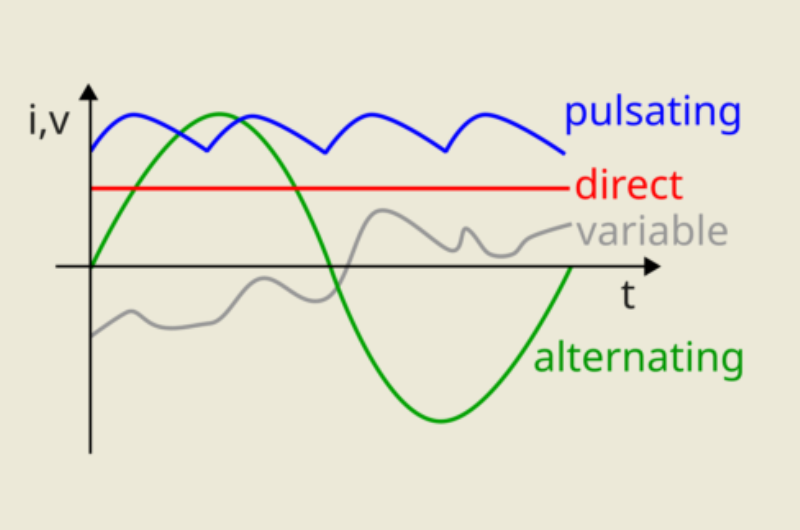
Direct electrical current flows in one direction, because the power source forces it to do so. However, we can’t easily transform this direct current to higher or lower voltages, which limits its usefulness. Batteries and inverters convert solar energy to alternating current, to overcome this obstacle.
How Inverters Convert Direct Solar Energy
Inverters convert direct current to alternating current by changing the incoming direct current flow back and forth very rapidly. Inverters then ‘clean’ the alternating current to make it compatible with the power grid.
Batteries come into play when a householder (or utility) wants to store the solar power for later use. In this instance:
- The inverter feeds the direct current to a storage battery or batteries.
- The inverter then converts this to direct current in response to demand.
The first inverters appeared in the 19th century as commercial power stations arrived. In those days life was simpler. There was no need for batteries and inverters to convert solar, because the technology simply did not exist:
- The first inverters were mechanical devices flicking the direct current back and forth.
- Nowadays there are no moving parts. Transistors and solid-state devices do it instead.
Inverter-Based Utility Grids Using Batteries
The old model of power stations burning coal and oil is fading, although maintaining the right power frequency is still essential. Much of the new grid energy comes from commercial solar panel ‘farms’ and inverters.
This renewable energy can come and go from a grid far faster than the time a traditional power station takes. This makes batteries and inverters converting solar, the ideal partners for maintaining grid frequency.
We are coming closer to the point where advanced inverters and their batteries will be able to restart grids if they go down. Slowly but steadily, the old regime is retreating in support of greener economies.
More Information
Grid Forming Inverters and Batteries Unite
Inverters and Batteries Make a Great Team