What do the words ‘dense forests of carbon nanotubes’ mean to you? Well, nanotubes are microscopically tiny graphite carbon sheets rolled into cylinders. Although you would need a mighty powerful microscope to be able to see them.
Scientists at University of Surrey in England, believe their tiny nanotubes could take energy storage a huge leap forward. In practical terms, they are speaking of ‘super lithium-ion battery anodes offering longer driving ranges and talk times’.
What The Dense Carbon Forests Could Do
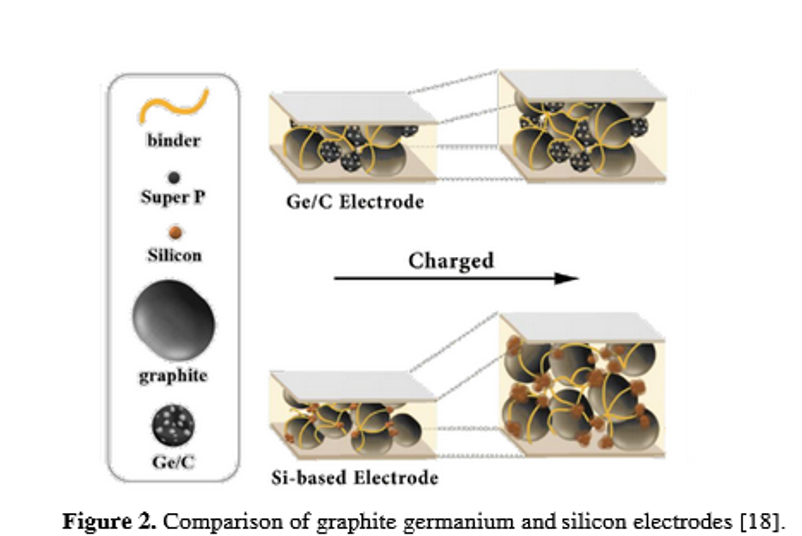
Lithium-ion batteries typically use graphite as their anode material. On the upside, this carbon material is cheap and widely available. But on the downside, graphite has a number of drawbacks.
You see, graphite is stable but unable to store the volume that energy users long for. Silicon could be a replacement material, were it not for the fact it expands during charging and cracks.
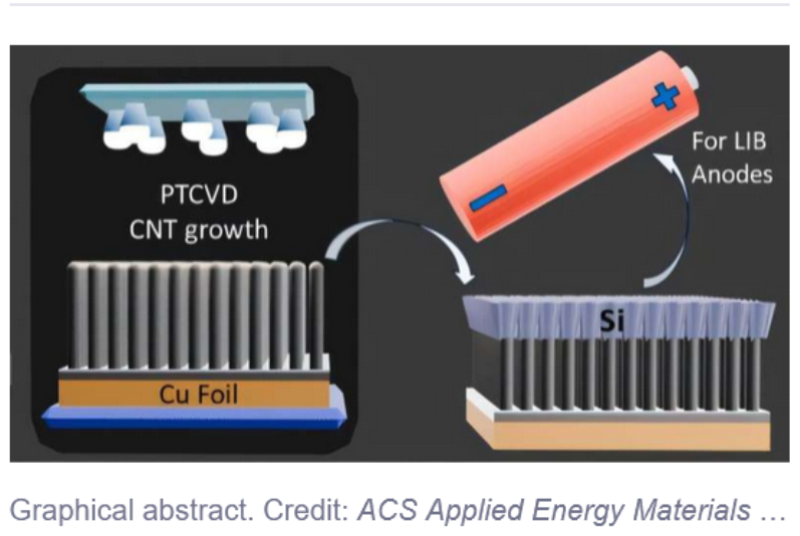
The dense forests of carbon nanotubes that Surrey University developed, could bring the best of both worlds within reach. That’s because the researchers found a novel way to combine the two materials:
- They grew the dense graphite forests directly onto copper foils. These provided the foundation for the anodes.
- Then they coated the tips of the carbon nanotubes with silicon, to enable the silicon to absorb the expansion.
When the researchers tested their novel invention, they were amazed at the results they achieved.
Remarkable Results From Modified Carbon Electrodes
The carbon graphite in lithium-ion batteries can store a maximum 370 milli-ampere-hours (mAh/g) energy per gram. By comparison, pure silicon stores over ten times this amount.
The dense forests of carbon nanotubes with a silicon topping, stored almost as much energy as pure silicon. They also displayed improved stability and performance over repeated recharge cycles.
“Our design offers a practical route to harness silicon’s huge storage capability, without sacrificing cycle life” enthuses Prof Ravi Silva. “This is a much-needed breakthrough, delivering very high capacity, fast charging, and long-term durability.”
More Information
Graphite in Electrochemical Batteries
Silicon-Graphite Anodes – The Way Forward?