Do you remember the days when you read comic books under the blankets at night with a flashlight? Perhaps you are younger and the subject is different now, but the principle is still the same. Batteries did not actually turn night into day on those occasions, but you get the idea.
When Batteries Seem To Turn Night Into Day
Nowadays, life is more serious if we are adults. We have a household to run, with fresh food in the refrigerator to keep cool. Imagine if we are watching television one night, when the utility skips a beat.
The entire home plunges into darkness for a moment. But that’s before the UPS kicks in, if we have one. The batteries inside it turn night back into day in our sitting room. The television is back on!
But the benefits of having backup batteries in our homes do not end there. Opportunist thieves may roam the streets during power cuts at night, looking for easy pickings. But if they enter our yard, our security lights will send them packing.
So yes, batteries do seem to ‘turn night into day’ in the situations we mentioned. Did you ever wonder how UPS batteries deliver uninterruptible power during utility blackouts? Stay with us and we’ll explain.
How UPS Batteries Keep The Lights On
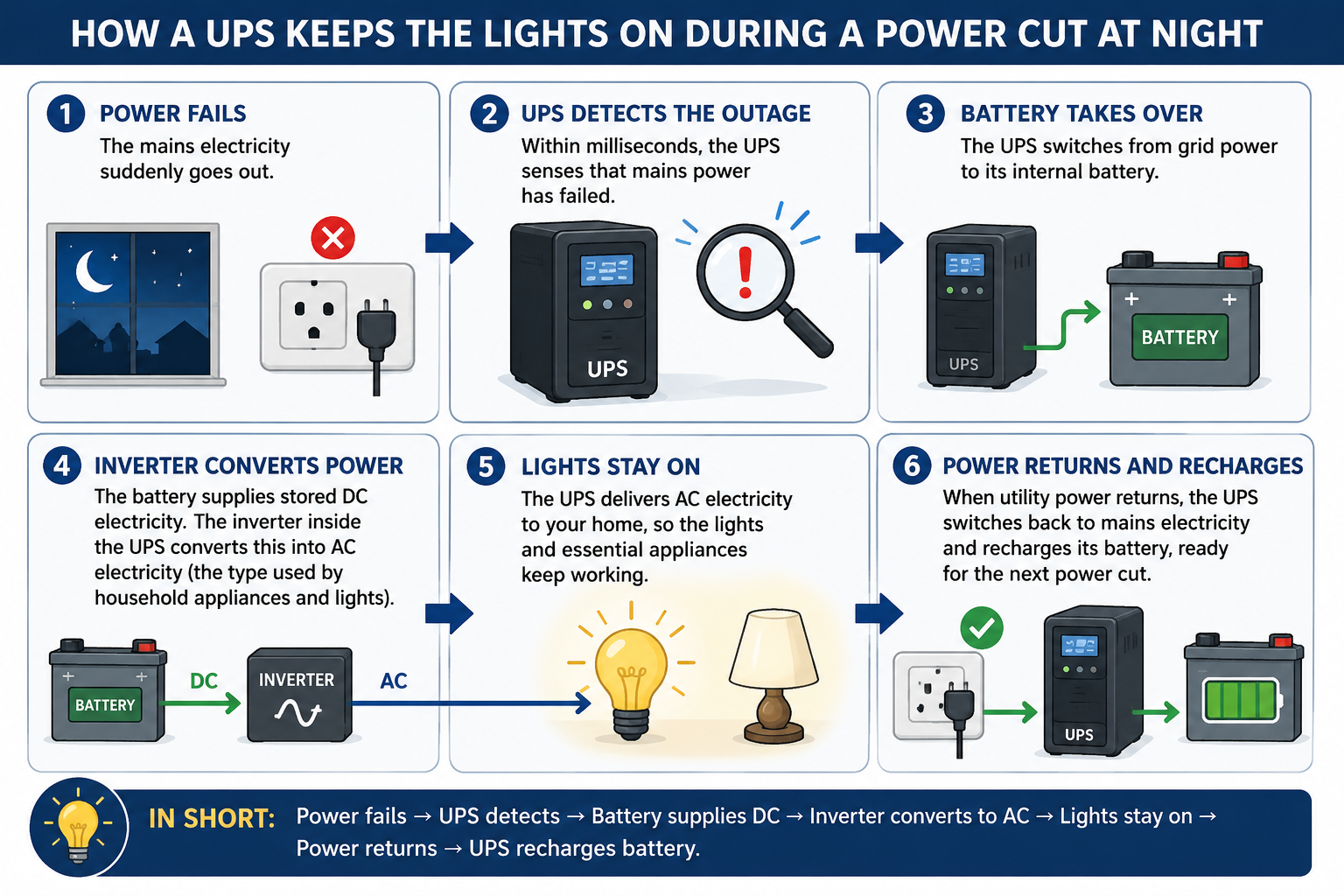
Whenever the mains power fails, the battery in a UPS uninterruptible power supply system reacts almost instantly. First, it detects that the mains electricity has failed.
Within milliseconds, it switches from grid power to UPS battery. That battery supplies direct current DC electricity from the battery. An inverter inside the UPS converts this into alternating current for household lights and appliances.
But when utility power returns, the UPS switches back to mains electricity. It recharges its battery, so it is ready for the next power out. Now you know exactly how batteries turn night into day during power cuts.
More Information