Solid-state lithium-ion batteries replace the flammable liquid electrolyte in conventional lithium-ion cells, with a solid material. However, the ceramics or specialized polymers used fall short, in terms of safely powering miniature electronics in high temperature environments.
Safety Issues Affecting Batteries For Miniature Electronics
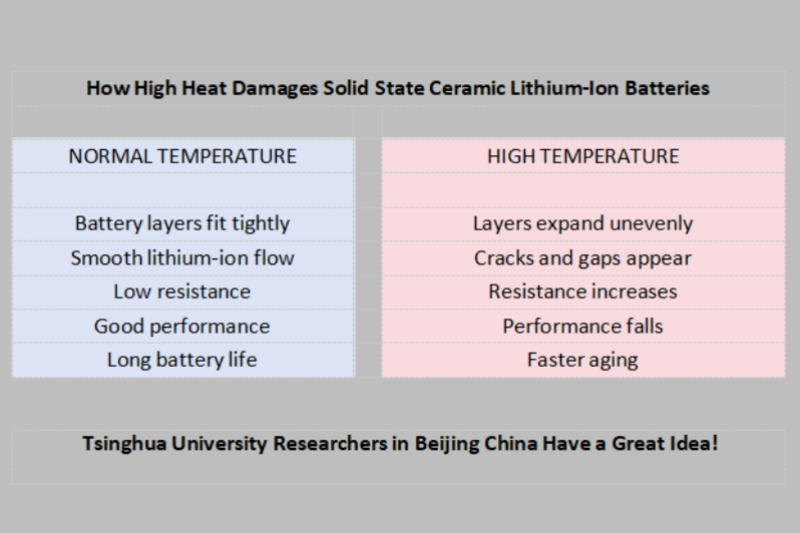
High temperatures can damage the delicate interfaces, where the solid electrolyte touches the battery’s electrodes. Unlike liquids, which can flow and maintain contact as materials expand and contract, solid materials are much less forgiving.
When a battery becomes too hot, the different layers may expand at different rates, creating tiny cracks, gaps, or areas of poor contact. These increase electrical resistance and degrade battery performance.
Heat can also trigger unwanted chemical reactions inside battery cells. Some solid electrolytes begin to break down at elevated temperatures, producing compounds that interfere with the movement of lithium ions. As a result, the battery may charge slower, lose capacity, and have a shorter operating life.
Repeated exposure to heat also accelerates ageing. Lithium can become trapped in inactive forms, reducing the amount available for storing energy.
While solid-state batteries are generally safer than liquid-electrolyte batteries, excessive heat can still damage their structure, reduce efficiency, and shorten their useful lifespan. Overall, these factors reduce a solid state lithium-ion battery’s potential for safely powering miniature electronics.
Modified Solid Electrolyte For Miniature Electronics
Battery scientists at Tsinghau University in Beijing, China, have built a tiny, all-ceramic solid-state lithium-ion battery. We understand that certain modifications make this suitable for safely powering miniature electronic devices in extreme environments.
Quite dramatically, this novel battery can withstand temperatures in a range of 32º F to 300º F / 0º C to 150º C. The solution turned out to be stacking multiple layers of ceramic solid electrodes.
This design improved battery performance, while ensuring that miniature electronic devices were able to operate across a wide temperature range too.
More Information
How Ceramics Make Our Batteries Work Better