When people think about batteries, they may imagine metals and chemicals inside smart cases. But ceramic materials are also becoming popular for good reasons. Let’s see how ceramics make our batteries work better by ironing out problems.
More About Ceramics in Batteries
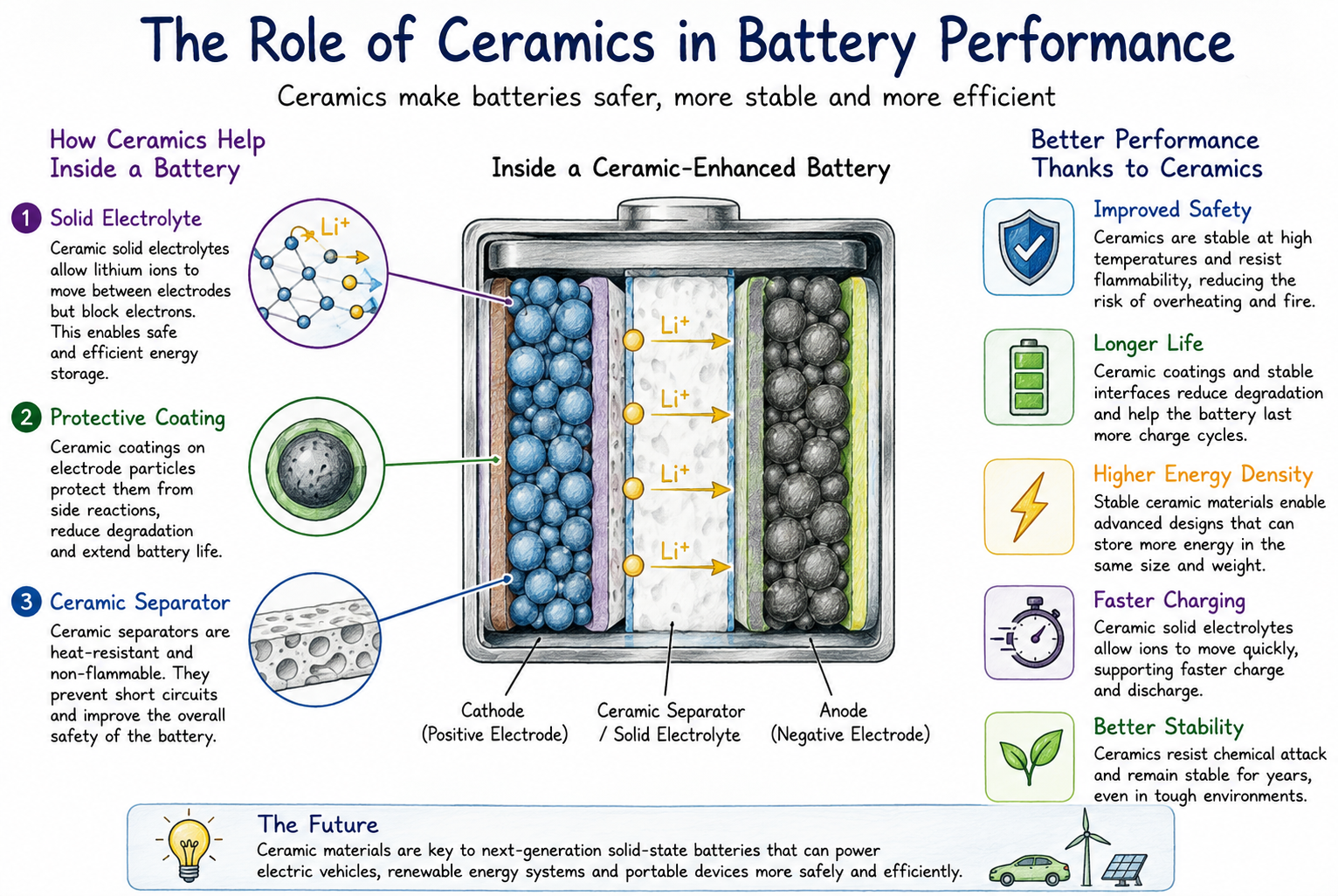
We’ve may well have ceramic floor tiles in our bathrooms. However, in this instance, ceramics are hard, heat-resistant materials that help batteries conduct ions, improve safety, prevent short circuits, and last longer.
Here are two popular ceramics you may have heard about through our blog:
- Aluminum oxide used for separator coatings, insulation, and safety enhancement.
- Lithium lanthanum zirconium oxide that eases the flow of lithium ions while blocking electrons.
Battery scientists value ceramics because they can withstand high temperatures. They also resist troublesome chemical reactions, while conducting ions and protecting other battery components from damage.
Now you have a general idea how ceramics make batteries work better, let’s examine this fascinating topic in more detail.
Advantages of Using Ceramics in Batteries
Ceramics do interesting things inside batteries. Some of them are solid electrolytes that let ions pass through, while preventing rogue electrical currents. Others serve as coatings to improve safety and extend useful battery life.
Meanwhile, in laboratories battery scientists are creating ingenious ceramic separators, that reduce the risk of overheating and short circuiting. But that’s not all there is to how ceramics make batteries work better.
The Road Ahead Making Batteries Better
We wrote this article to explain why interest in ceramic battery materials is growing. They are already helping overcome limitations in lithium-ion, and now sodium-ion batteries.
While challenges may remain, ceramics are already helping improve battery performance. As research continues, these versatile materials will do even more to help make our batteries work better.
More Information
Solid Ceramic Electrolytes For Our Future
Ceramic Separators With Long Carbon Fibers