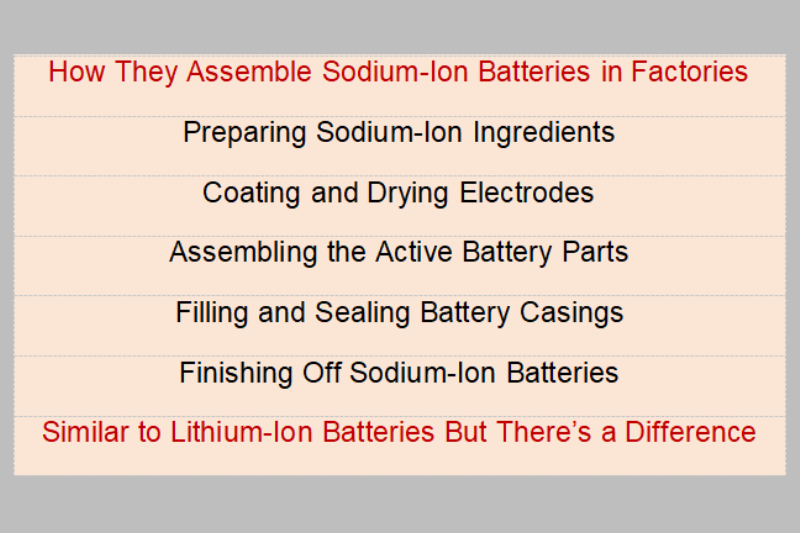
Did you ever wonder how they assemble sodium-ion batteries in factory production lines? Well, the process is similar to assembling lithium-on batteries, except for the key active materials. Robots complete almost all the actual work, although humans quality-check at the end.
Preparing Sodium-Ion Ingredients
Prepare sufficient stocks of the main ingredients of sodium-ion batteries. These include the positive electrodes, negative electrodes, electrolyte, separators, current collectors, and active materials. Combine the active electrode materials with binders and conductive carbon, to create smooth slurry.
Coating and Drying Electrodes
This is the critical stage of assembling sodium-ion batteries. Spread the slurries onto thin sheets of metal foil. Remove the liquid from the coatings by baking them. Press the dried layers with rollers to make them smooth, dense and even. Finally, trim the electrodes to the correct size.
Assembling the Active Battery Parts
Stack or roll the positive electrode, separator, and negative electrode into a compact cell. The separator keeps the electrodes apart, while allowing sodium ions to move between them. Place the completed cell into a metal casing or flexible pouch, depending on the battery design.
Filling and Sealing Battery Casings
Inject liquid electrolyte into each cell under clean, dry conditions. The electrolyte carries sodium ions between the electrodes during charging and discharging. After filling, seal each cell to keep out air and moisture, which could damage the battery.
Finishing Off Sodium-Ion Batteries
The final stage of how they assemble sodium-ion batteries, checks for quality. Robots charge and discharge each cell several times to activate the chemistry and measure its capacity. Then humans inspect the batteries for leaks, swelling, or electrical faults.
Comparing Lithium-Ion and Sodium-Ion
The process in similar except for the active materials. We always like to point out another difference. Lithium-ion batteries use copper and aluminum foils for their negative and positive current collectors respectively. Whereas sodium-ion gets away with aluminum throughout, and that’s a saving!
More Information From Our Blog