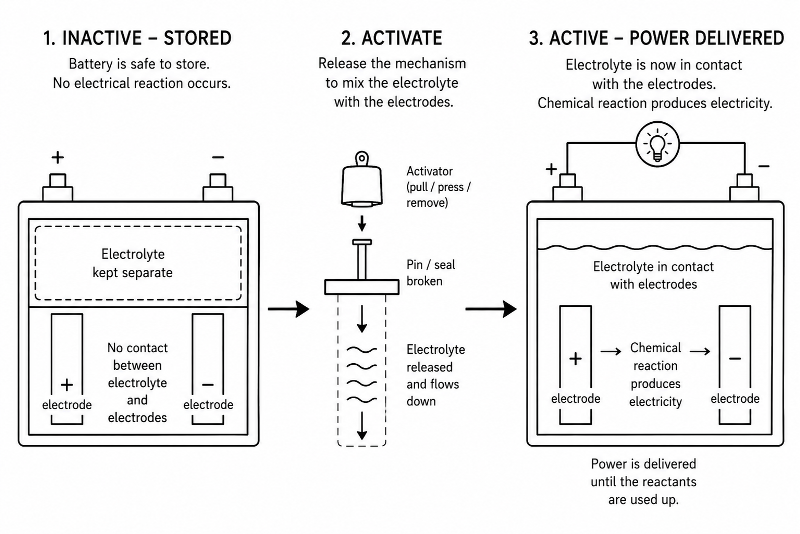
Most batteries start producing electricity as soon as they are manufactured or recharged. But reserve batteries are different. This is because the basic principles of reserve batteries ensure they remain inactive until someone turns them on.
Reserve batteries only become operational when something turns them on. This unique feature gives them an exceptionally long shelf life, while ensuring instant, reliable power on demand.
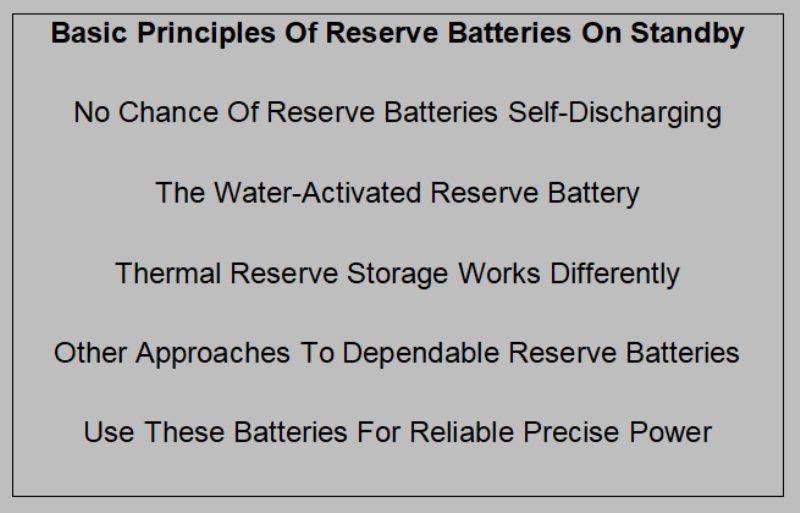
The Water-Activated Reserve Battery
A water-activated battery stores its electrolyte separately from its cell(s), leaving the battery chemically inactive. However, when we make salt or fresh water available, this completes the electrolyte circuit and kick starts an electrochemical reaction.
These batteries have powered emergency radios, marine survival equipment, rescue beacons, and military devices for many years. They suit these applications because they can remain in storage almost indefinitely without significant deterioration.
Thermal Reserve Storage Works Differently
The working principles of thermal reserve batteries are different. They contain a solid electrolyte that does not conduct electricity at normal temperatures. However when something activates it, internal heat melts the electrolyte, delivering high power almost instantly.
We find these batteries in guided missiles, spacecraft, emergency systems, and other demanding applications where absolute reliability is essential. They usually operate for only a short time, but they do deliver precise power.
Other Approaches To Dependable Reserve Batteries
Other approaches use sealed, usually glass containers of liquid electrolyte. These break mechanically or electrically to activate the battery. While others rely on gas generation or pressure changes to bring the electrolyte into contact with the electrodes.
Use These Batteries For Dependable Precise Power
Although reserve batteries are rarely seen by consumers, they perform vital roles wherever dependable power must remain available after years of storage. As battery technology advances, their unique ability to remain dormant until needed will continue to make them indispensable for emergency and mission-critical applications.
More Information From Our Blog
How Ions Travel Through Electrolytes
Sulfate Salts in Aqueous Electrolytes
reserve,batteries,water,heat,thermal,sealed containers,electricity,activate,turn on,