No rechargeable battery is entirely risk free, although sodium-ion batteries are safer than their lithium-ion counterparts. Some battery chemistries have tweaks that reduce the likelihood of severe battery fires. Safety is an important reason why sodium-ion batteries are attracting growing interest.
Why Sodium-Ion Chemistry Is Safer Than Lithium-Ion
Sodium-ion batteries store energy by moving ions between their two electrodes, the same way as lithium-ion. However, the materials inside these two battery types are different:
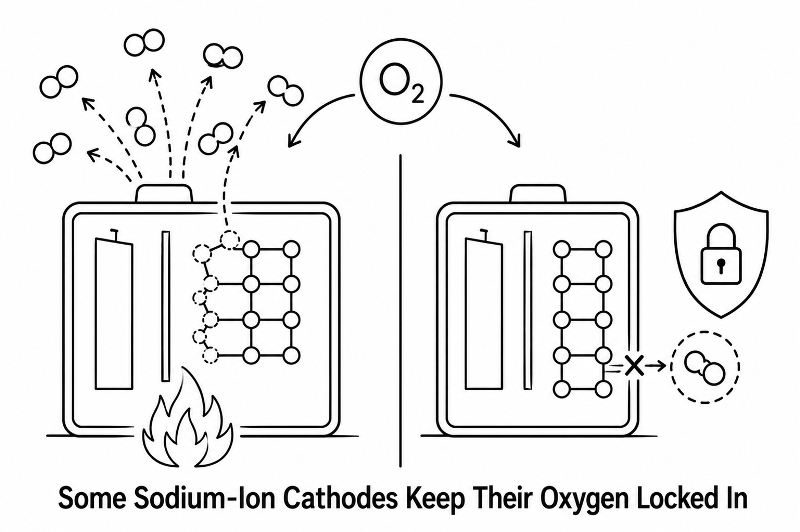
- Many sodium-ion models use more stable electrode materials that are less likely to release oxygen if the battery overheats.
Sodium Batteries Are Safer With Less Risk Of Fire
Sodium-ion batteries may be safer because oxygen can feed a fire, and many sodium-ion varieties release little or no oxygen during thermal runaway:
- Some lithium-ion batteries use metal oxide cathodes, that may release oxygen during thermal runaway, making a fire harder to control.
- The safest sodium-ion batteries generally use prussian blue cathodes, which hold on to their oxygen even when overheated.
- As a result, they are less likely to cause an intense fire than sodium-ion batteries with layered oxide cathodes.
Researchers are continuing to improve sodium-ion cathode materials, so future designs may become even safer.
Ongoing Research Is Improving Technology Further
Battery scientists are continuing to improve sodium-ion battery safety, by developing better electrodes, electrolytes, separators, and battery management systems. These improvements benefit both sodium-ion and lithium-ion technologies.
Even so, battery safety depends on far more than chemistry alone. Good manufacturing, quality control, correct charging, and proper protection circuits all play an important role in preventing accidents.
What We Will Gain From a Wider Range of Batteries
The trend is towards different battery types for different applications. Lead-acid batteries remain one of the safest and most dependable choices for many standby and backup requirements.
Lithium-ion batteries continue to offer the highest energy density for portable equipment. Sodium-ion batteries will provide another attractive option, where cost, stability, and dependable performance are priorities.
Next Article. Where Are Sodium-Ion Batteries Heading?
Our next article unpacks this fast-developing story further. Come back soon and discover where sodium-ion batteries are heading, and where users are already adopting them now.
More Information From Our Battery Blog