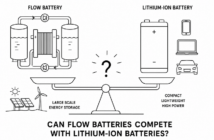
Why are flow battery tanks so important? Most batteries keep their energy-storage materials inside the battery itself. A flow battery takes a very different approach.

Its Energy Is In Liquid Electrolytes In External Tanks.
This simple idea has an important consequence. Increasing the amount of electrolyte can increase the amount of energy the battery can store.
The tanks contain the liquids that carry the chemical energy. When the battery operates, pumps move the electrolytes from the tanks through the battery cell. This is why flow battery tanks are so important.
The Cell Decides How Fast The Battery Produces Electricity
The cell determines how quickly the battery can produce electricity. The tanks determine how much electrolyte is available to store this energy. This creates an unusual degree of flexibility.
If We Need The Flow Battery To Store More Electricity
Let’s suppose we need a flow battery to store more energy. Larger tanks can hold more electrolyte, right? Well, then, the battery cell does not necessarily have to become larger.
For example, a flow battery providing electricity for four hours could have larger or more tanks and provide electricity for eight hours. The same basic battery cell would then continue to provide the required power, while the additional electrolyte provided more energy storage.
This Is Step Change Away From Needing More Batteries!
Increasing storage is quite different from conventional batteries, where increasing energy capacity means adding more battery cells.
The tanks are therefore much more than electrolyte containers. They allow us to increase energy storage too!
There is a trade-off, however. Large tanks require more physical space, larger pumps and supporting equipment. Even so, the ability to increase energy storage by increasing electrolyte volume is one of the most distinctive features of flow batteries.
More Information From Our Battery Blog