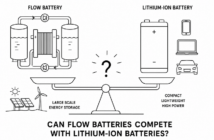
Can a flow battery store energy forever more? You could be in the right place, except your answer should be ‘for a longer time’. In fact, this should be far longer than a conventional battery.

Long Term Storage Is One Strength Of a Flow Battery
One important advantage of a flow battery is its ability to store electricity for long periods. Unlike a battery we design mainly for short bursts of power, we can build a flow battery with large tanks containing substantial quantities of electrolyte.
This Stored Energy Is Available When We Need Electricity
The tanks play an important part in a flow battery’s ability to store energy. When the battery has a full charge, the chemical materials in the electrolytes hold that stored energy.
If we do not need the electricity immediately, then the liquids can simply remain in their tanks. The battery does not have to keep producing electricity while it waits.
Pumps Move Electrolytes Through The Flow Battery Cell
The pumps move the electrolytes through the battery cell when we need the electricity. Chemical reactions then release the stored energy and produce an electrical current.
How long a flow battery can supply electricity depends largely on the size of its electrolyte tanks and the rate at which electricity is being drawn from it.
Increasing The Electrolyte Increases The Energy Available
Increasing the amount of electrolyte increases the amount of energy available. Increasing the size of the cell and related equipment can boost the rate at which that energy delivers.
This gives flow batteries an unusual advantage. We can alter their energy capacity and power output independently.
That makes them particularly ideal for situations where we need to store electricity for several weeks, or longer, rather than just a short period.
This Advantage Teams Flow Batteries With Renewables
This ability is useful when we produce renewable electricity during the day, but only need it later. Solar power, for example, may be plentiful during daylight hours but unavailable after sunset.
More Information From Our Battery Blog