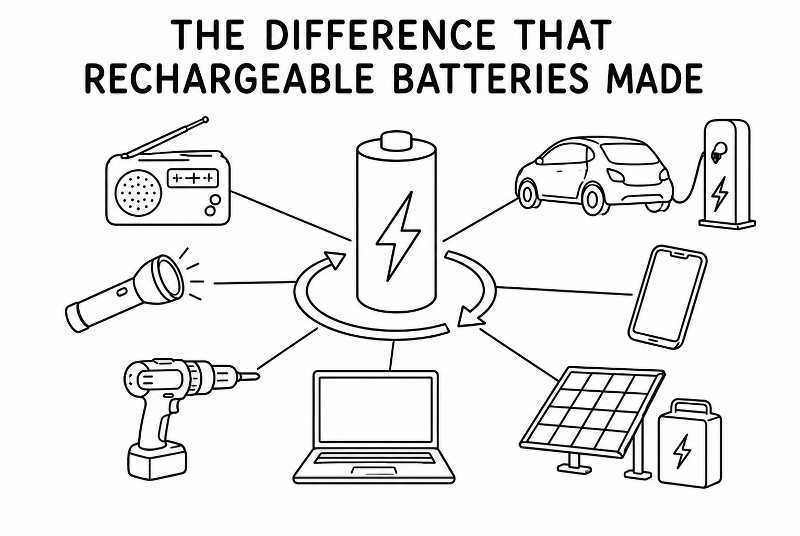
Early batteries changed science and technology by providing a source of electricity whenever scientists needed it. However, once their chemicals were used up, their days were over. The difference that rechargeable batteries made was quite dramatic!
Rechargeable Batteries Changed That Situation Completely
The development of rechargeable batteries changed that situation completely. Instead of being used once, a rechargeable battery could store electrical energy, and release it.
And then restore it by passing electricity through it in the opposite direction. This opened the way for batteries to become long-term energy storage devices, rather than disposable sources of power.
Planté Developed The First Practical Rechargeable Battery
French physicist, Gaston Planté, developed the first practical rechargeable battery in 1859. His invention, the lead-acid battery, used lead plates in a bath of sulfuric acid.
Planté Could Discharge And Then Recharge His Cell
Planté could discharge and then recharge his cell repeatedly! This was a major breakthrough! It provided a practical way to store electricity generated earlier and used later.
Rechargeable batteries soon became important for telegraph systems, emergency lighting, and scientific experiments. Later, improved lead-acid batteries supported early electric vehicles, telephone exchanges and standby power systems too.
The Significance Of Rechargeable Batteries Grew
The significance of rechargeable batteries became even greater, as electricity generation expanded. This was because they could smooth interruptions in supply, and provide power where generators or mains electricity were unavailable.
They also created the foundation for many later battery technologies. The difference that rechargeable batteries made was far-reaching!
Planté’s Invention Marked An Important Turning Point.
Planté’s invention marked an important turning point. It transformed electricity from something that had to be used immediately, into something that could be stored and used later.
More Information From Our Battery Blog
Gaston Plantés Lead-Acid Battery
Planté’s Choice of Lead & Why He Made It
R