

 Battery Technical
Hydrogen and Lithium Titanate Oxide Trains
Hydrogen trains harvest their energy by burning the gas in internal combustion engines, or from…

Electricity has always intrigued me. I have been writing about batteries and energy storage for more than ten years, and have published over 4,000 articles on this website. During that time, I have researched developments across lead-acid, lithium-ion, sodium-ion, flow batteries, and emerging energy-storage technologies. My goal is to explain complex battery concepts in clear, practical language that anyone can understand. My writing career began unexpectedly after leaving the corporate world. What started as a search for a new direction gradually became a fascination with batteries, renewable energy, and the science that powers modern life. Writing may not have made me wealthy, but it has given me the opportunity to explore an industry that continues to evolve in remarkable ways.
Battery Technical
Hydrogen trains harvest their energy by burning the gas in internal combustion engines, or from…
 Battery Technical
Graphite is a naturally-occurring, low cost inert material, which readily conducts electricity and heat. Most…
 Battery Basics
Community batteries are local energy storage units, that belong somewhere between home batteries and utility-scale…
 Battery Basics
Across the Atlantic Ocean in the United Kingdom, a movement is growing to stamp out…
 Featured
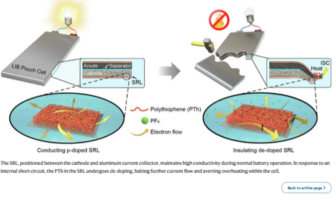
We published a post yesterday concerning the LG Chem thermal insulator, that halves the risk…
 Battery Basics
Did you ever ask a friend what is inside lithium-ion batteries, and leave the conversation…
 Battery Technical
Thermal runaway occurs in lithium-ion batteries after an internal short circuit releases high current instantly.…
 Battery Technical
Business Korea says its Samsung’s small all-solid-state battery will be a ‘dream’ for wearable users.…
 Battery Basics
We can safety assume that electricity exists, because we can observe it powering light bulbs,…
 Battery Basics
Batteries have been with us for over two centuries, although they only became consumer devices…