Hydrogen trains harvest their energy by burning the gas in internal combustion engines, or from fuel cells reacting with oxygen. Fuel cells are a greener alternative, but they cannot sustain rapid acceleration when leaving stations. When hydrogen and lithium titanate oxide batteries come together, they become winners in a new generation of high speed trains.
Hydrogen Fuel Cells Versus Lithium Titanate Oxide
Hydrogen-Oxygen Fuel Cells
Hydrogen fuel cells convert the stored energy in the gas into electricity, with help from an oxidizing agent. They deploy a pair of redox flow reactions to achieve this, but there the similarity with batteries ends.
Hydrogen fuel cells require a continuous supply of the gas and the oxidizing agent, which is usually oxygen. Whereas batteries have an onboard store of energy, which they release on demand as a steady supply.
Lithium Titanate Oxide Batteries
Titanate is an organic compound composed of titanium oxides, or oxides containing the titanium element. It is a stable material with excellent ion-exchange capability. This gives it great potential as a battery anode.
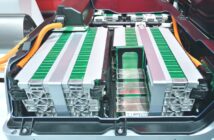
Lithium titanate oxide batteries are a modified version of lithium-ion chemistry, with lithium-titanate nanocrystals coating their anodes instead of carbon. They recharge quickly, and are excellent for quick bursts of power.
A Novel Hybrid Solution for Siemens Trains
Hydrogen fuel cells and lithium titanate oxide batteries are therefore complementary when teamed together in a mini grid. The fuel cells deliver the base load, while the batteries provide peaking power.
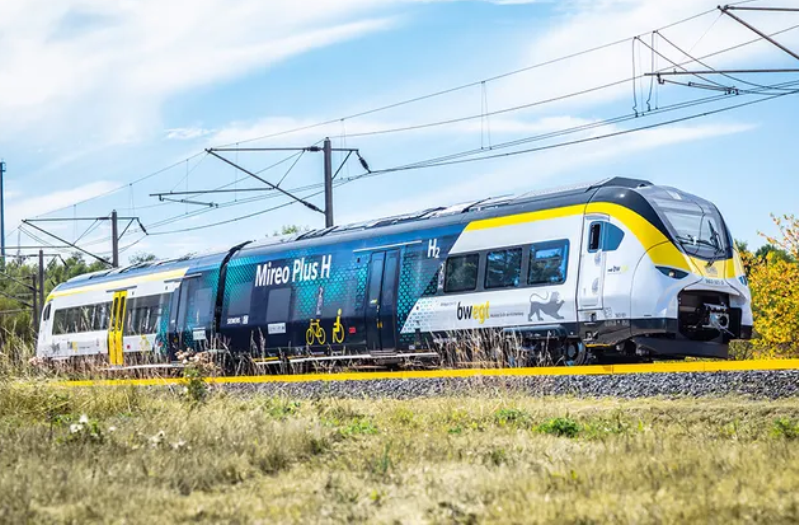
Siemens Mobility cottoned onto this idea for its Siemens Miero Plus H hydrogen train project. This is an initiative to replace multiple diesel traction units with greener energy, according to Engineer Live.
Using lithium titanate oxide batteries when accelerating, offers several advantages over lithium-ion. These benefits include longer battery lifespan, enhanced power, and less CO2 emissions.
Hydrogen gas still provides the primary power for high-speed cruising between stations. However, the batteries add additional safe, reliable acceleration when needed, without having to rely on an overhead power line.
More Information
Lithium-Titanate: Is This the Big One?