By 2007, aspiring president Barack Obama was convinced global warming was reality. On Tuesday, November 18 of 2008, the president-elect pledged to keep his campaign promises regarding emissions leading to global warming. These promises were to “reduce climate-altering carbon dioxide emissions by 80% by 2050. And invest $150 billion in new energy-saving technologies” according to New York Times on that day.
Barack Obama Makes Bold Acclamations on Behalf of America

“Now is the time to confront this challenge once and for all,” he said. “Delay is no longer an option. Denial is no longer an acceptable response.” However, some industry leaders and Congress members were already saying this would cause too much strain during the economic downturn.
America should hold back on behalf of the economy for a while, they said. Barack Obama was not for deterring though. He argued his plan would reduce oil imports, and create jobs in renewable energy and conservation. To his mind, his policy would also reverse warming of the atmosphere. He had unsuccessfully put a similar bill to the Senate earlier that same year. Clearly, his policy lacked the overall support of the political will.
The 2008 Barack Obama Climate Action Plan

The first edition of the program encouraged use of alternate fuels, preserving forests, and studying climate change more intensely. The final two-year update regulated industry more tightly with a view to cutting American carbon emissions further.
The far-reaching proposals embraced increasing natural disaster preparedness, creating and improving existing hospitals, and modernizing infrastructure to withstand extreme weather better. The plan would have supported conservation of land and water resources, and developed actionable climate science.
Furthermore, it would have encouraged other countries to take action to address climate change. All with a view to reducing deforestation, and lowering subsidies that increased the use of fossil fuels. However, the new incoming president scrapped it on his first day of office. He explained he felt it was “harmful and unnecessary and he wanted to revive the coal industry.”
Related
Climate Change Part 7: 1927 Passed Us By
Climate Change Part 24: George W Bush Energy Policy Kills Kyoto
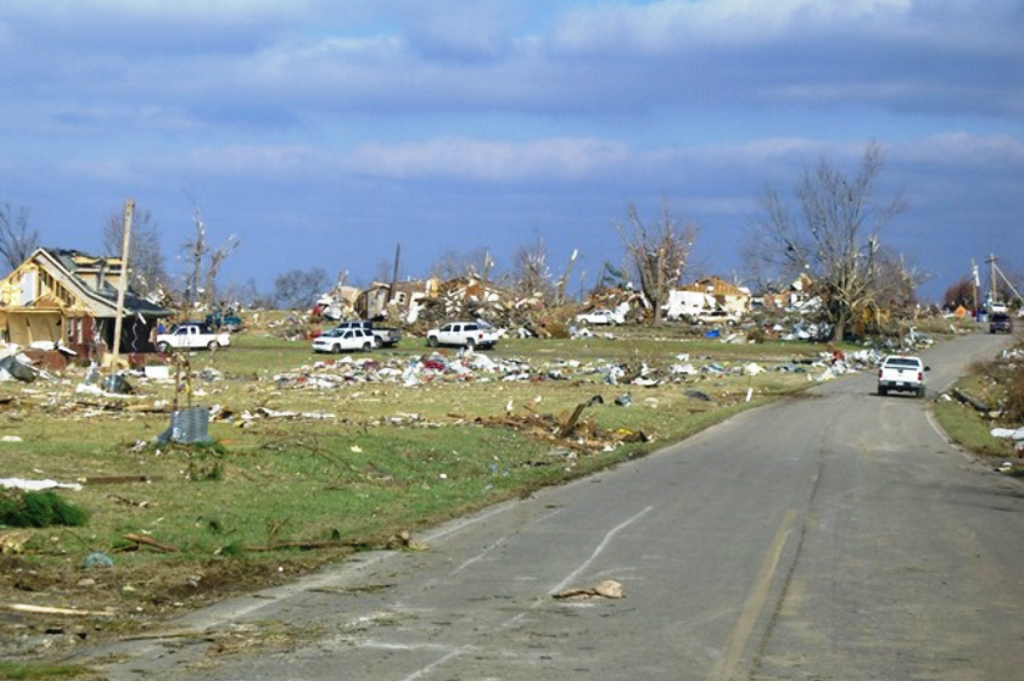
Preview Image: 2008 Super Tuesday Tornado Damage in Lafeyette Indiana